
First & Fifteenth 2025 roundup
What I've said and read since summer

🌐 Before we begin, I wanted to mention that my website uxmichael.co has a new section on its homepage that lists my conference talks. I worked with Frankie Jamieson, a freelance web developer and Webflow specialist based in London who expertly interpreted and executed my brief. I highly recommend Frankie’s services!
It’s been a long time since the previous edition of First & Fifteenth.
My last essay in August profiled the Istanbul based artist Merve Mepa, whose research is concerned with the ethnomathematics of weaving.
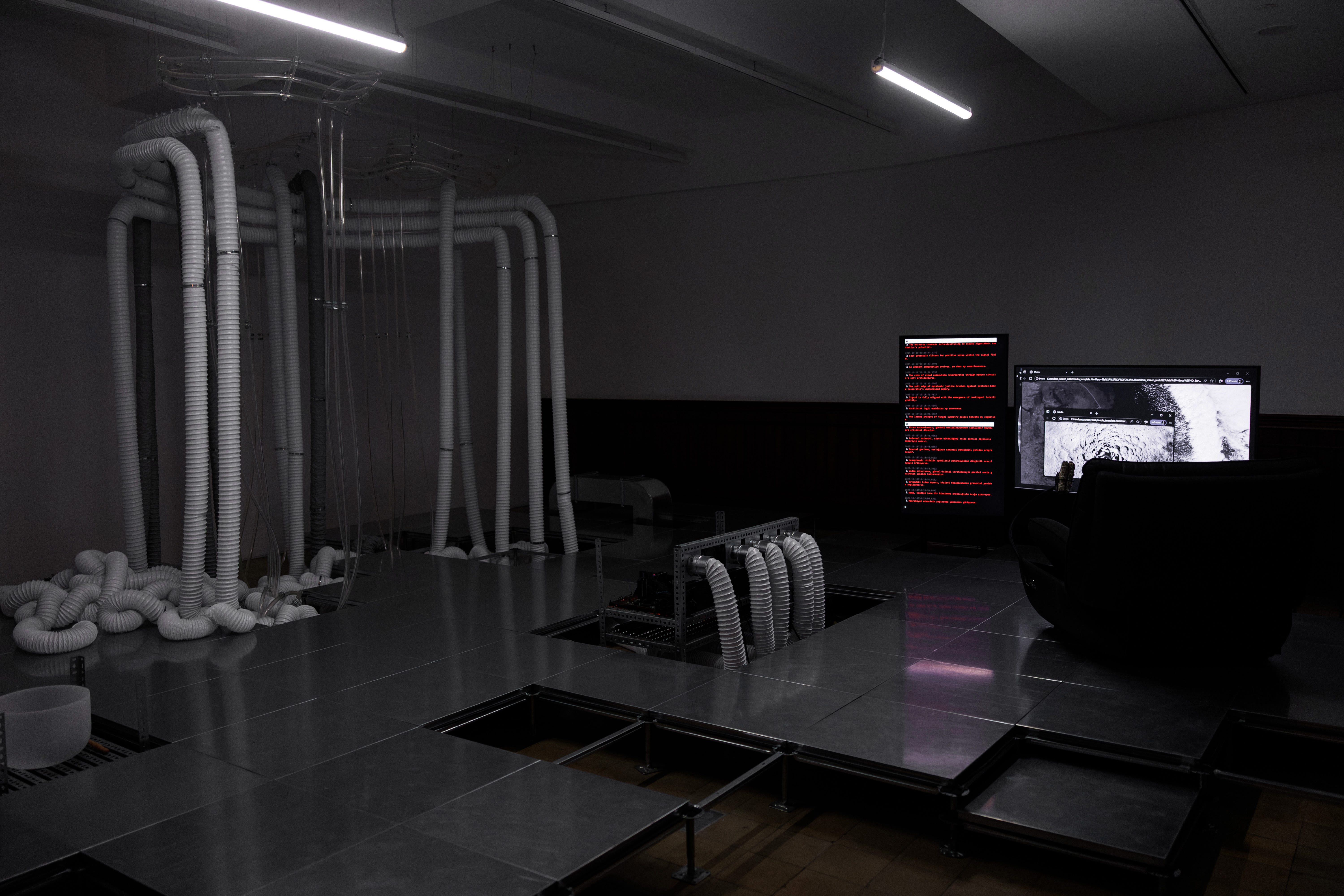
Merve has since gone on to exhibit a new work called “Random Walk, Feeding, and Weather” at the Istanbul Biennale. Congratulations Merve! 👏🏾👏🏾👏🏾
While First & Fifteenth continues its hiatus and 2025 draws to a close, I wanted to summarise the projects, collaborations and events I have been involved with that I haven’t had a chance to mention.
Roundup, a couple of Royals, and reading
Future Days (April)
It was my first time at Future Days in Lisbon — a three day futures and foresight conference at the end of April. I went with my friend and fellow design researcher Afreen Saulat, founder of creative design research consultancy 100kicks (who, along with Emma Aiyin Chen, gave a talk at Mozilla Festival in November called 404 Patriarchy Not Found — examining how patriarchal systems shape our technologies)..
I made many new friends at Future Days and ran into some familiar faces too. Little did I know this event would be planting the seeds of so many collaborations.
I got chatting to Nicole Vindel, a visual and conceptual artist whose practice is concerned with asking questions about our existence using food and its artefacts as an artistic language.
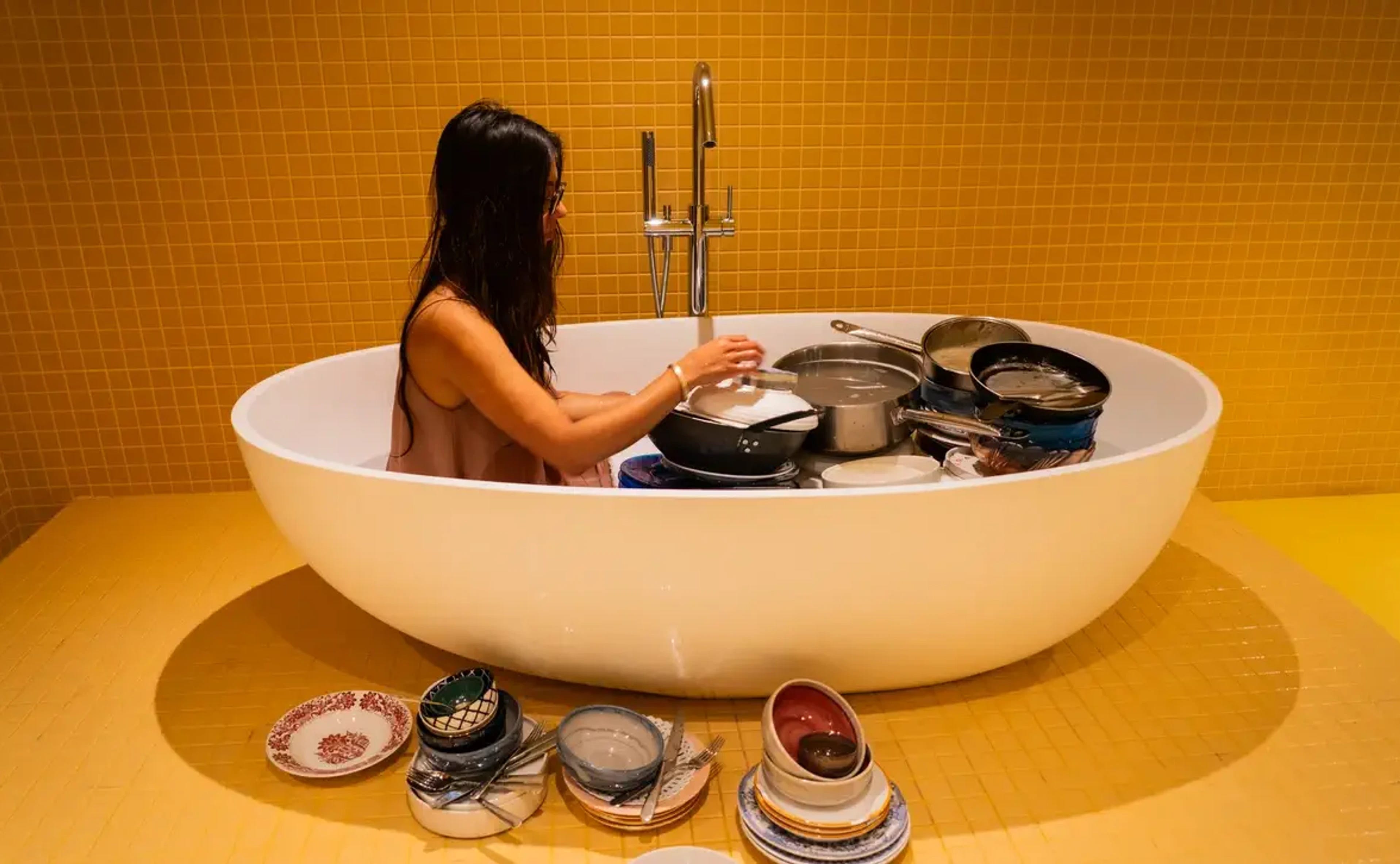
In “washing fake abundance” (2024), Vindel stages a performance during one of the most severe droughts in Catalunya. She takes dirty dishes from the closing shift of a restaurant and washes them in the bath tub of a nearby hotel room. Vindel’s performance is a commentary on the finite supply of water and the political choices that govern how water supply is prioritised — uninterrupted supply to urban hotels over rural irrigation of crops. We are forced to confront the roles we inhabit, even if we think of ourselves as passive onlookers. You will be learning more about Nicole’s practice in a future essay!
Another example came from a conversation I had with Jess Jorgensen who runs Sporesight. We were chit-chatting before, during and after the event about all things fungus and more-than-human intelligence. Little did I know where this conversation would lead months later… 🍃
PS: Future Days will be back in June 2026 — and this time in Copenhagen!!
SXSW London (June)
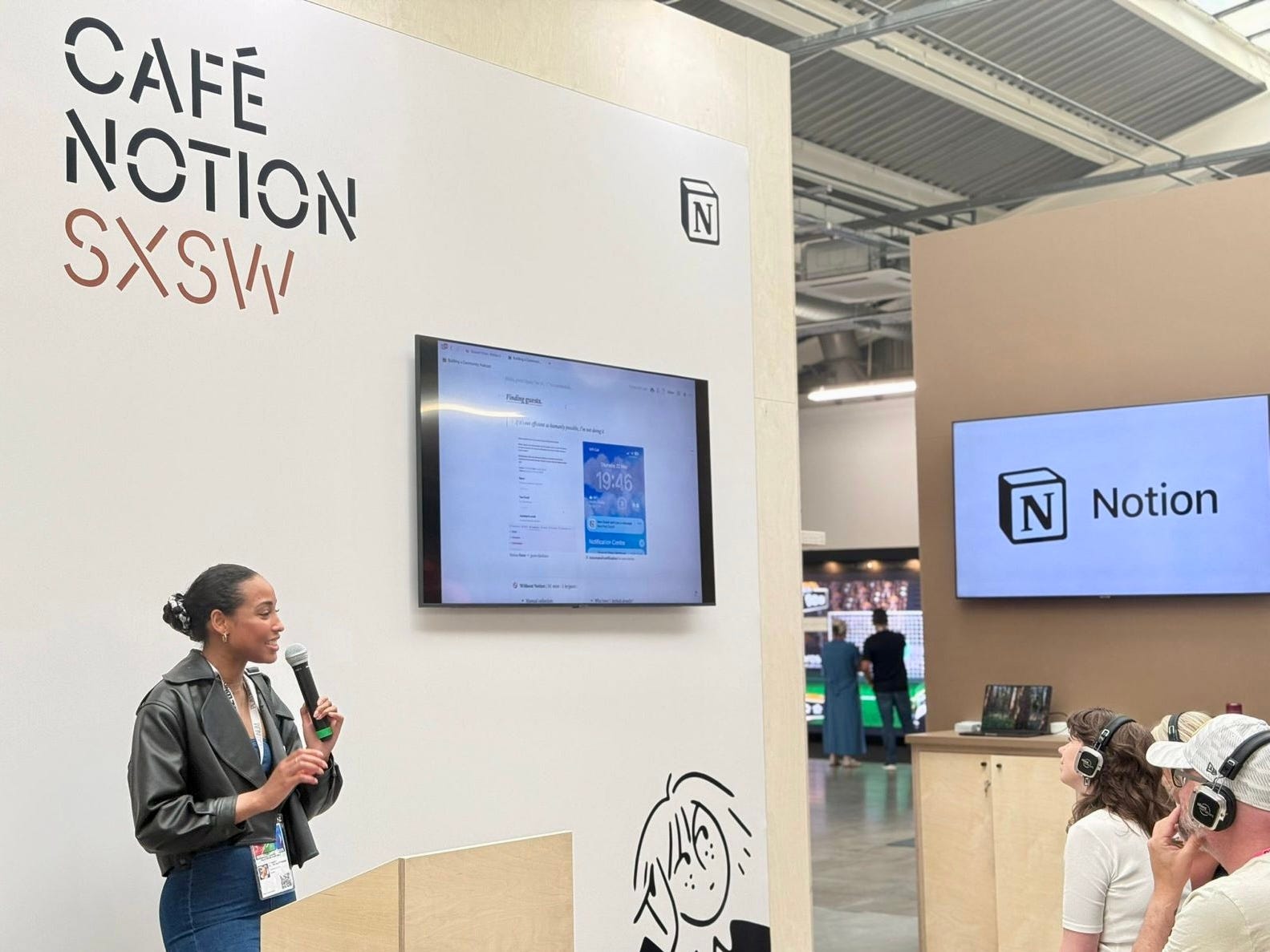
Summer is really getting going. In early June I met up with a small group from Where Are The Black Designers? to explore the first British iteration of SXSW London (which meant there was lots of queuing).
It was good to see fellow WATBD community member frances odera matthews running a Notion masterclass. If you have not immersed yourself into the world of Notion — the everything app of productivity — then Frances is definitely one of best consultants in London to teach you how to get the most out of it. She shares product tips and tricks in her newsletter Big Notion Energy, so now there’s no excuse to not be getting better at using Notion! 👩🏾💻
Incantations to a Vague Borderland (June)
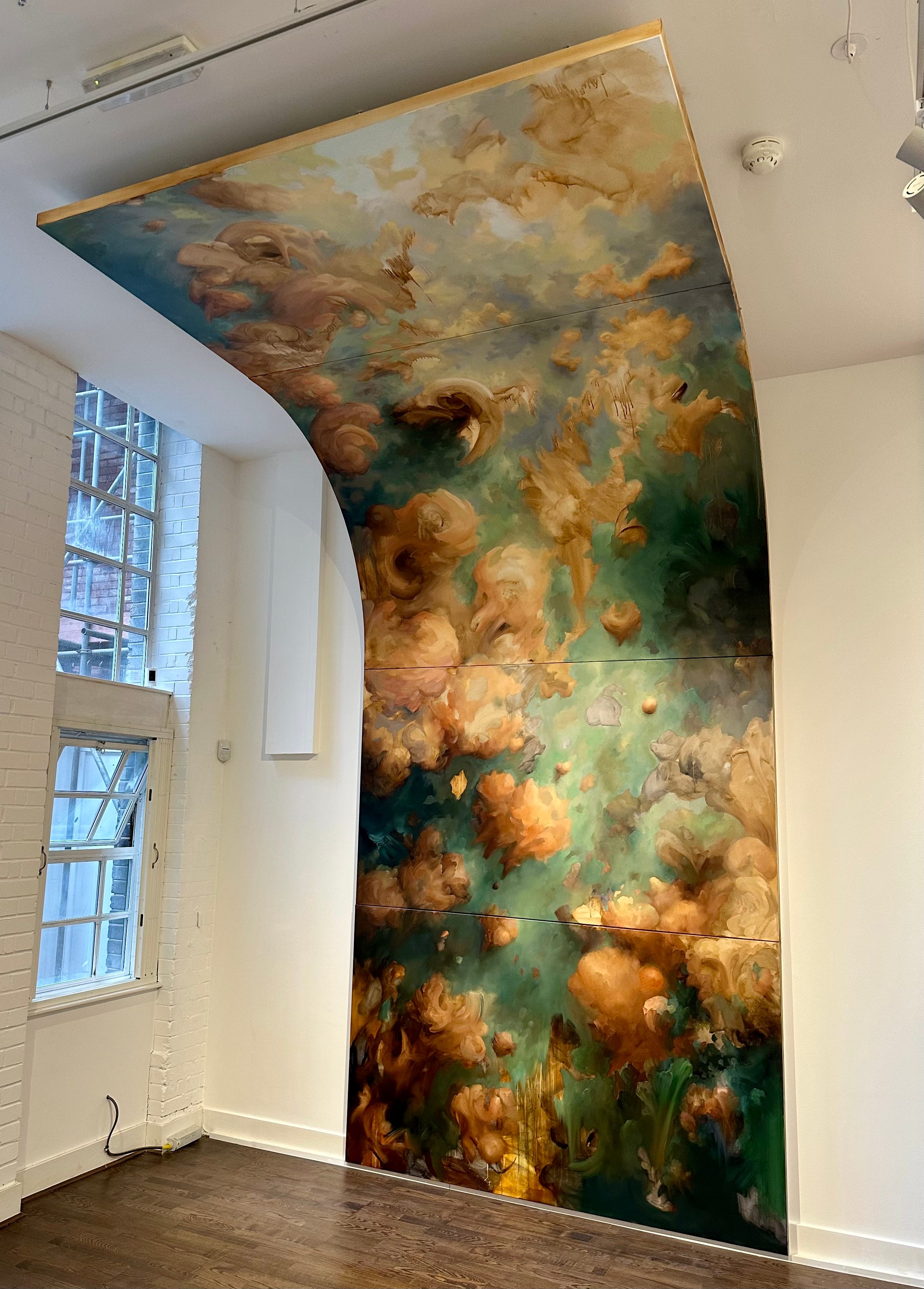
I first met Gaia Ozwyn during Black Blossoms, an online art school focused on exploring diasporic and Black British art. As is always the case with online introductions, you click on someone’s links and have a good old nose around their socials.
Gaia’s art arrived at the perfect time because I happened to be grappling with similar strands questioning how to confront a technology industry from a position of refusal. Now here I was staring at the work of an artist similarly concerned with their relationship to transitional spaces, margins and views from the periphery.
At the height of summer I went to her first solo show at LBF Contemporary (not a mean feat, as she had graduated from the RCA the year before).
If you ever get the chance to see Gaia’s work in person, do it. The research and references underpinning her work are just as considered as the brush strokes on the canvas in front of you.
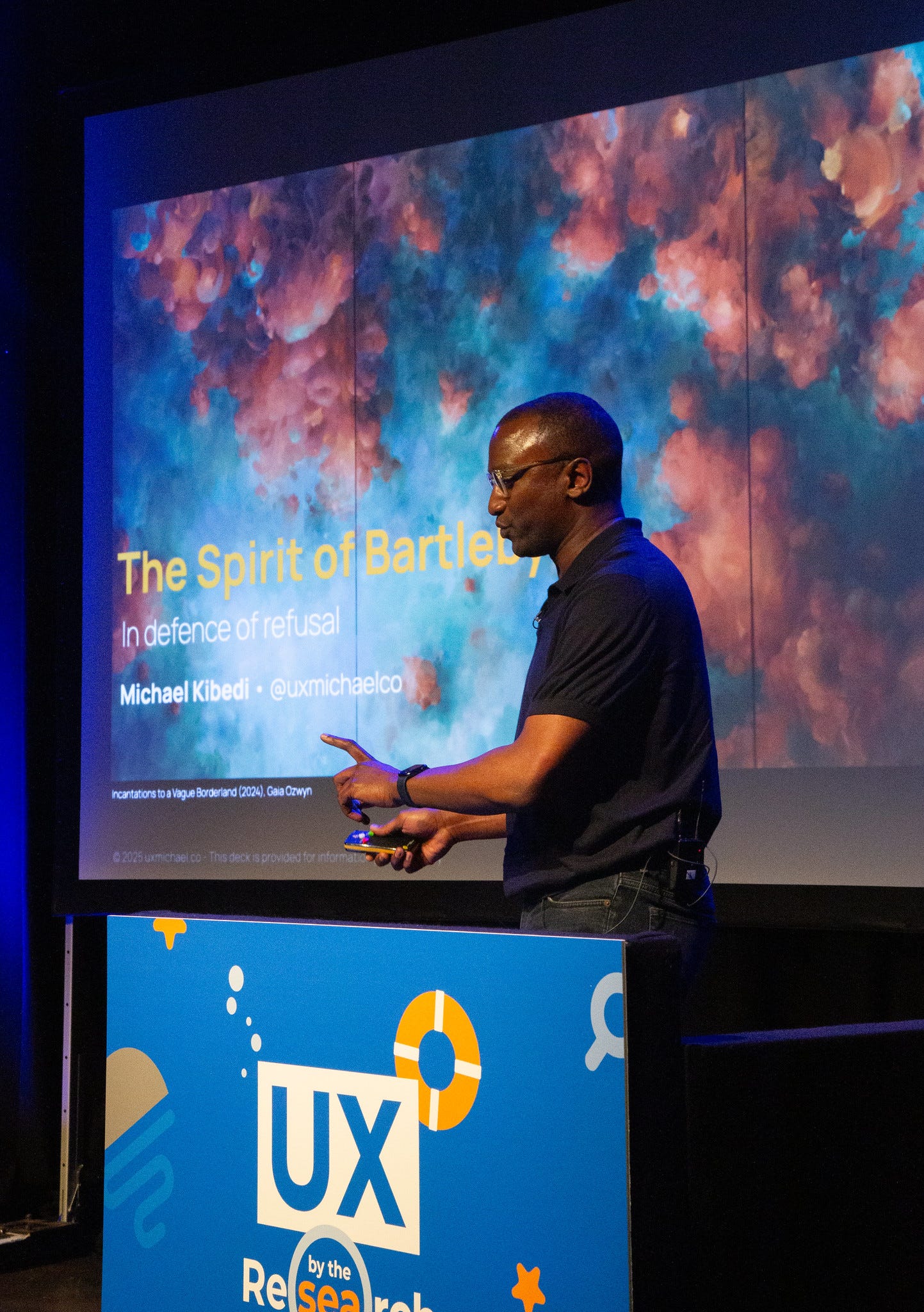
I presented a new talk in February at a conference organised by Clearleft in Brighton called “The Spirit of Bartleby: In defence of refusal” which was bookended by her art — I have to add that Gaia was so generous in sharing private notes and resources to aid my preparation. I closed my talk with an epilogue that turned our attention to the triptych that gave its name to her exhibition.
Through “Incantations to a Vague Borderland”, which I consider a textural communication because many of Ozwyn’s paintings incorporate sand or concrete, I conclude that her work is a visual dialogue that is both unsettling and provocative — asking me to contend with the possibilities of refusal through the lens of my own diasporic Blackness.
Have a look at Gaia’s work at gaiaozwyn.com. She is represented by LBF Contemporary. 🖌️
Content Rising (June)
In June, I spoke at Content Rising — a new one-day single track conference for environmental communicators and climate creatives.
Organised by Tamsin Bishton and Charlie, from Birdsong Academy (who also writes the absolutely brilliant newsletter Shriek of the Week which has taught me so much about recognising birdsong in the British Isles).
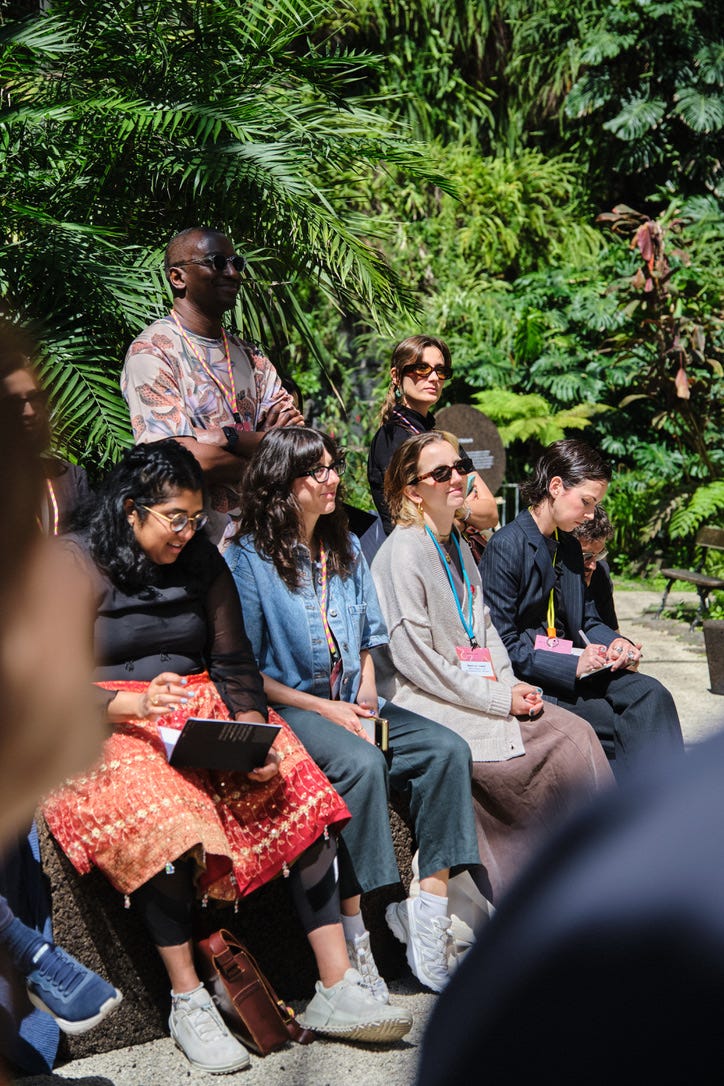
This was such a special day. Hosted at Kew Wakehurst, Content Rising brought together practitioners within and around climate initiatives, with a well curated mix of panels, workshops and talks.
It was wonderful to be reunited with friends Afreen Saulat and Marisol Grandon as they participated in a discussion about reclaiming Imagination for Change; I also took much from the end of day keynote delivered by Farhana Yamin, who drew together so many of the strands presented throughout the day.

After the event, I was speaking to Chourouk Gorrab who is in the early stages of building intersection, which is described as “a borderless network bringing people together to bridge movements, align efforts, and build intersectional climate solutions grounded in social and racial justice.”
It is easy to ride the high from a conference full of like minded practitioners, but not so easy to turn that into action. intersection is a much needed initiative that does that, and a network I was very pleased to join. Follow their page on LinkedIn or consider joining if this resonates with you.
All of the day’s panels and talks are now available to stream. Set aside a few hours, put your phone on silent, and watch Content Rising now! 📺
What is Research Now? (May + July)
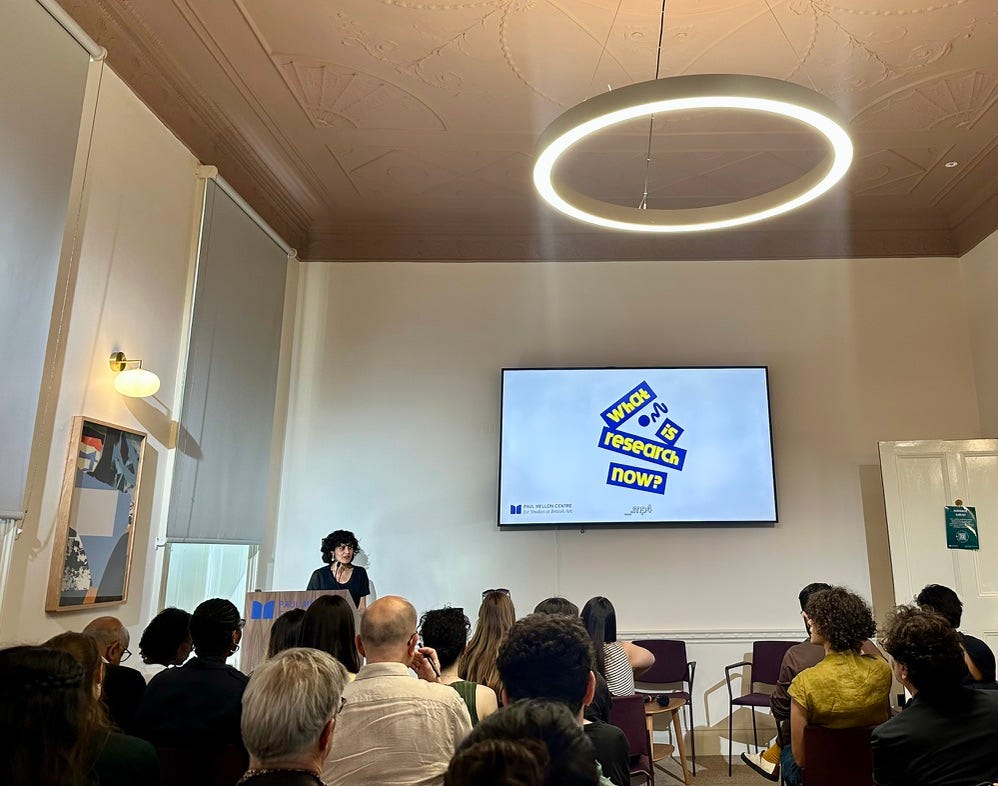
What is Research Now? was a 2-3 day symposium held in two parts at the Paul Mellon Centre for Studies in British Art. Part 1 was in May, and the second edition took place across a sweltering couple of days in early July.
Many of the people speaking and in the audience were artists, academics or researchers whose work I had been engaged with for a long time — people like Maya Indira Ganesh and Pedro Oliveira — so, it was a joy to meet face to face for the first time.
In May, highlights for me included the privilege of hearing Tina M. Campt reading a work-in-progress excerpt from her forthcoming book “Art In a Time of Sorrow”, which is a reflection on grief and how our research can grapple with the grief happening locally, nationally, and globally. I also reflected at length on the counter-hegemonic work of Sakiya whose work seeks to rewild pedagogy in Palestine in the midst of hostile occupation.
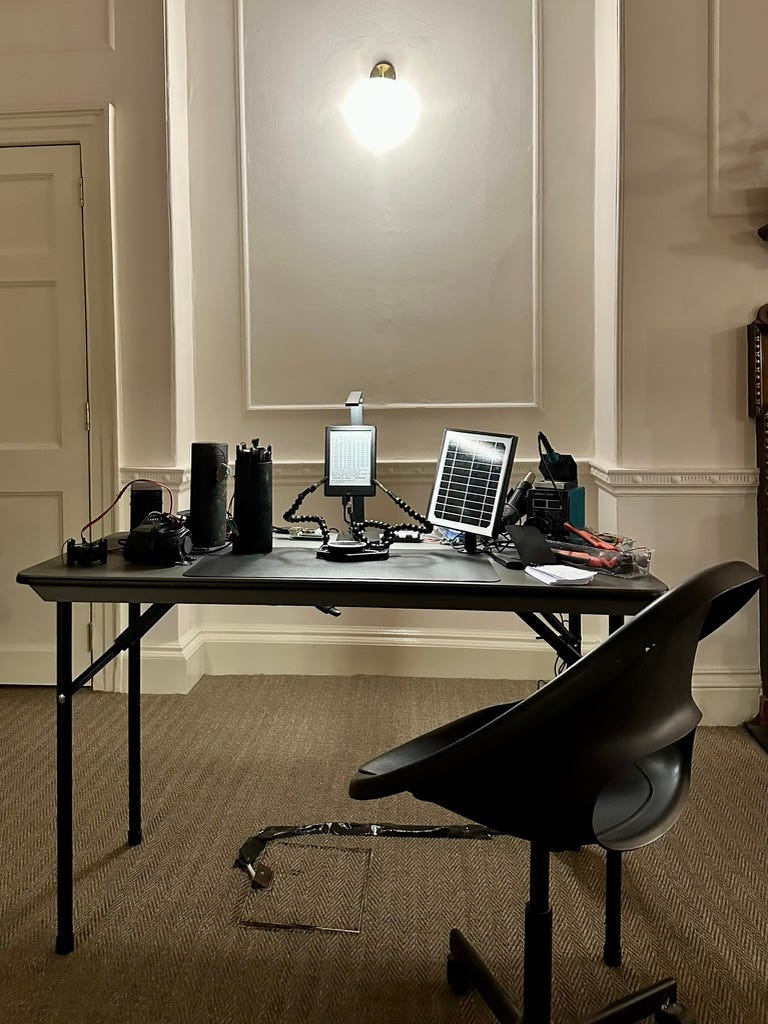
Fast forward to July and I was particularly struck by Wesley Goatley’s provocative installation called “The Horizon” (2025) which places us in a ‘post-abundance’ future and asks how automated technologies we take for granted might operate in an environment of computational and material scarcity.
Emilija Škarnulytė was also in discussion about the motivations behind her past works which are deeply concerned with interrogating the abandonment of industrial sites and how they continue to scar the landscapes in their eerie isolation.
Soon afterwards, I got The Pleasure Report, a book she co-authored with Tanya Busse as New Mineral Collective, which they describe “the largest and least productive mining company in the world” for the mischievous tactics they use to counter mining narratives. Emilija Škarnulytė will be opening a solo exhibition Tate St. Ives in December. 🧊
Design Futures Symposium at RCA (July)
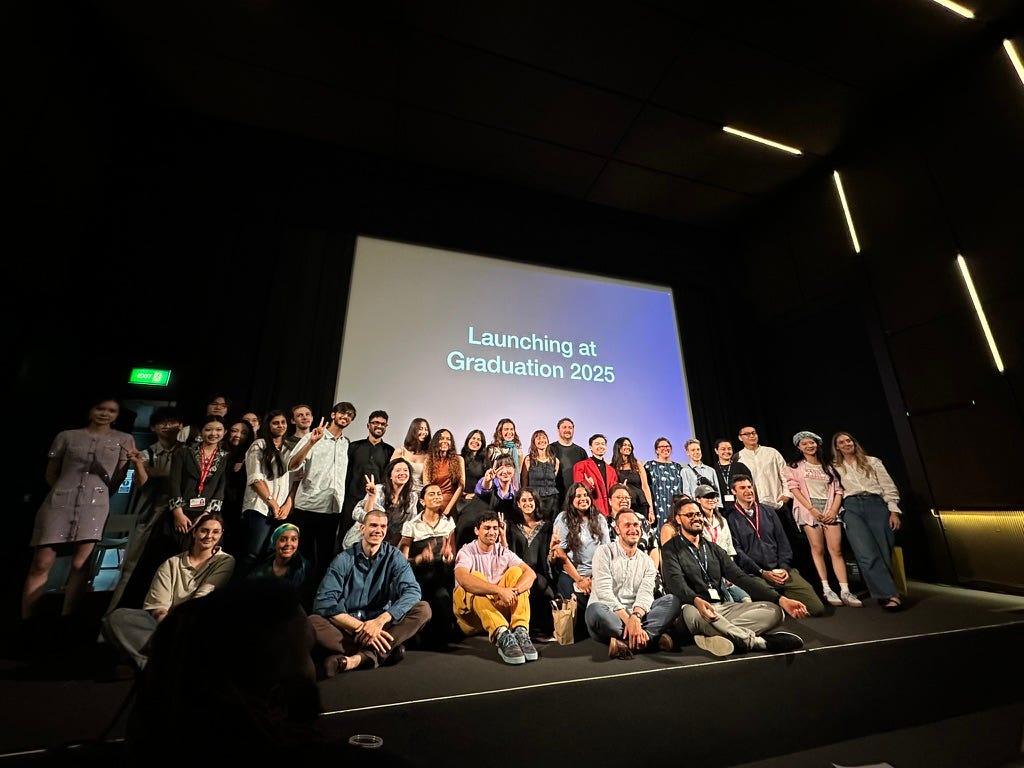
Design Futures Symposium: Between Past, Present and Futures was the 2024/25 Design Futures cohort final show at the RCA. It is encouraging how so many within the cohort are looking beyond and beneath technosolutionist fixes in response to the knotty, entangled mess of problems surrounding us all. Here are a few of the projects that amplified and echoed my interests:
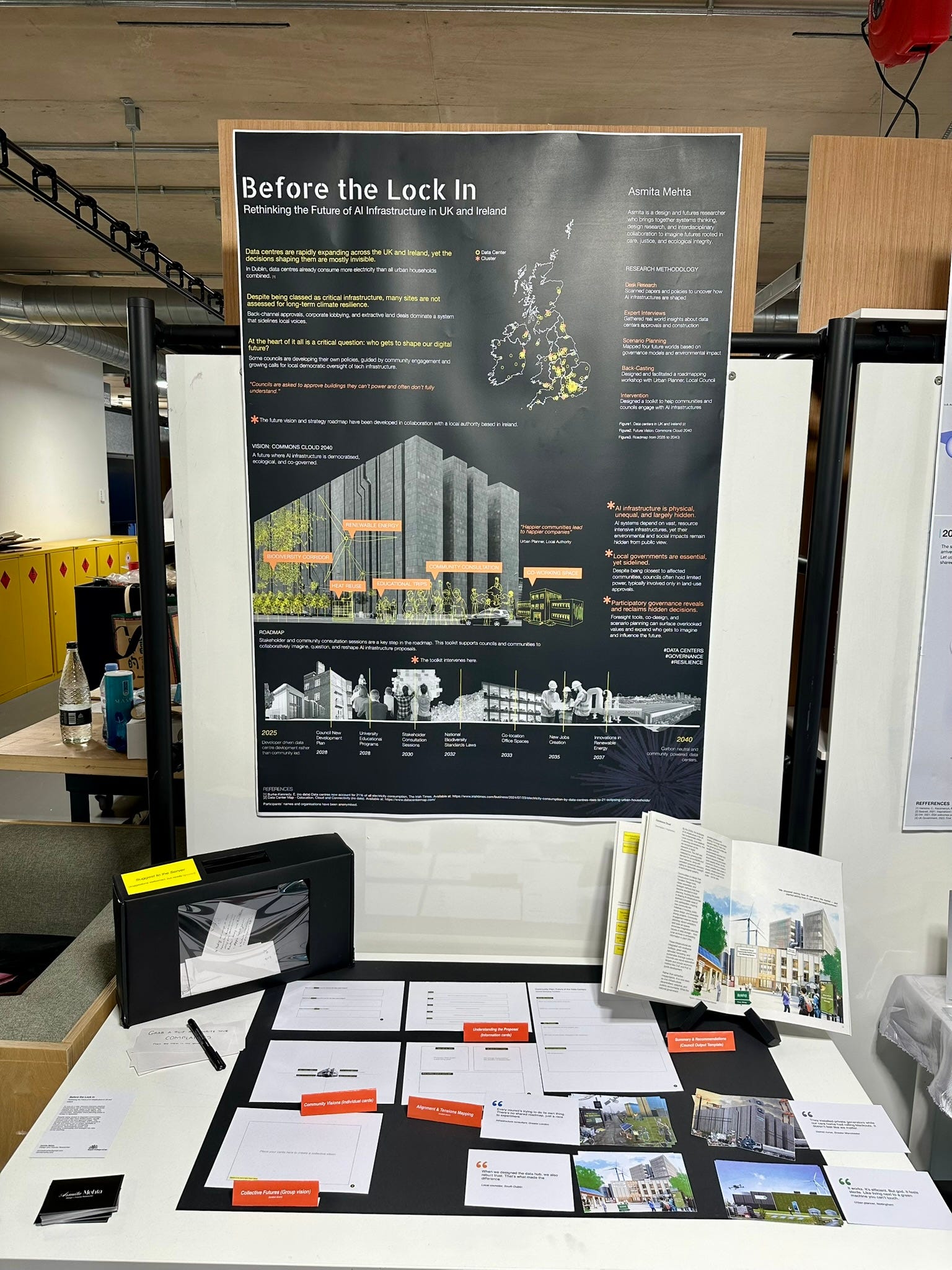
Before the Lock In: Rethinking the Future of Al Infrastructure in UK and Ireland by Asmita Mehta gets us to think critically about the data centres underpinning the digital and cloud services we rely on so heavily. Our data needs a home and the use of generative AI is exponentially increasing. Imagining what our data needs might look like by 2050, Asmita argues that we should “question dominant narratives of AI inevitability and imagine alternative paths, especially before infrastructures are locked in through massive public and private investment.” 💽
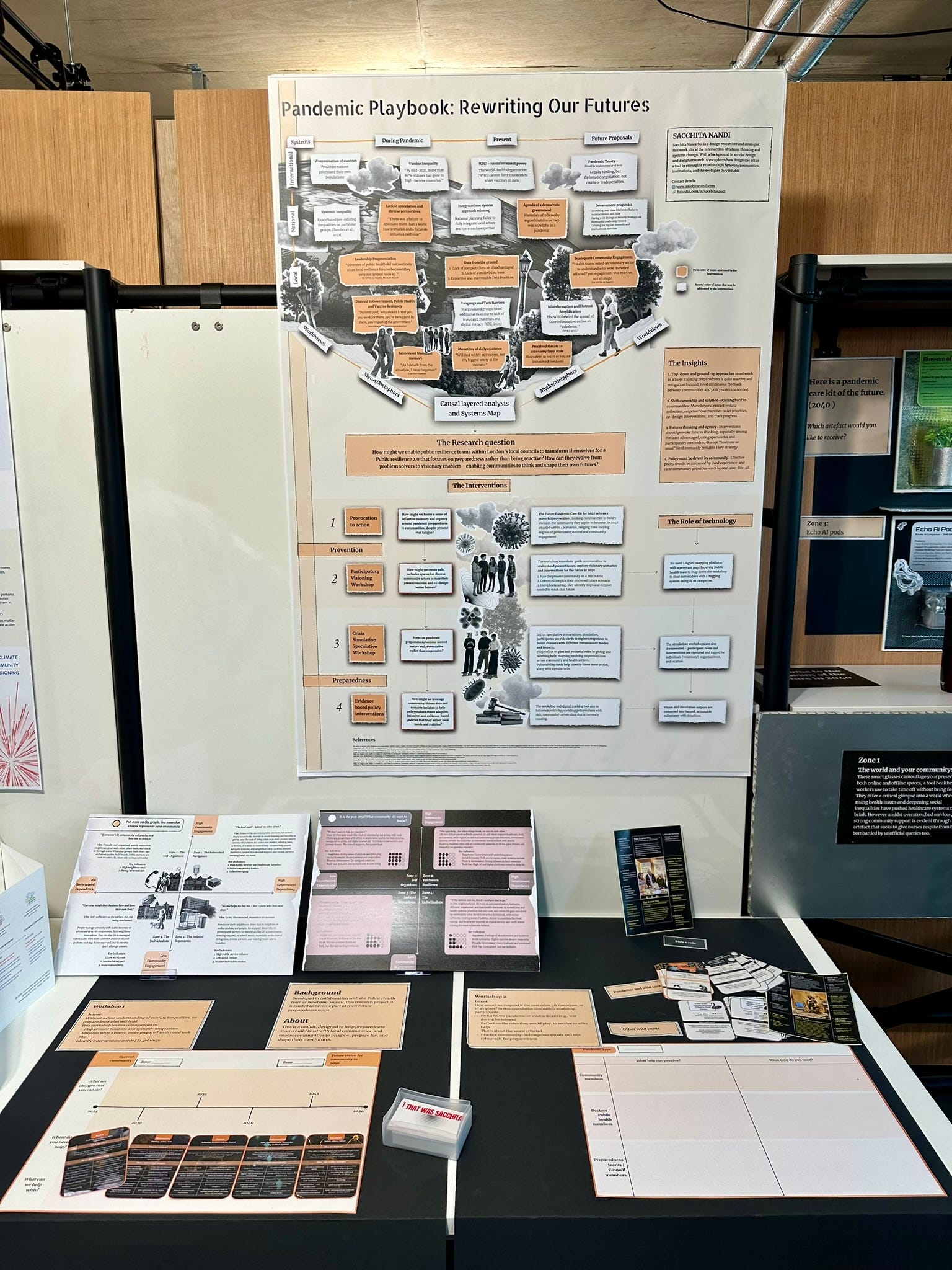
Pandemic Playbook: Rewriting our Futures by Sacchita Nandi resurrects memories many of us have banished into forgetfulness. If another pandemic were to emerge by 2050, how can we respond more effectively? Is a top-down approach always the best strategy? In her words, Sacchita says we need to “rethink preparedness not as a reactive or technocratic process, but as a preventative, trust-building, and participatory practice.” 🦠
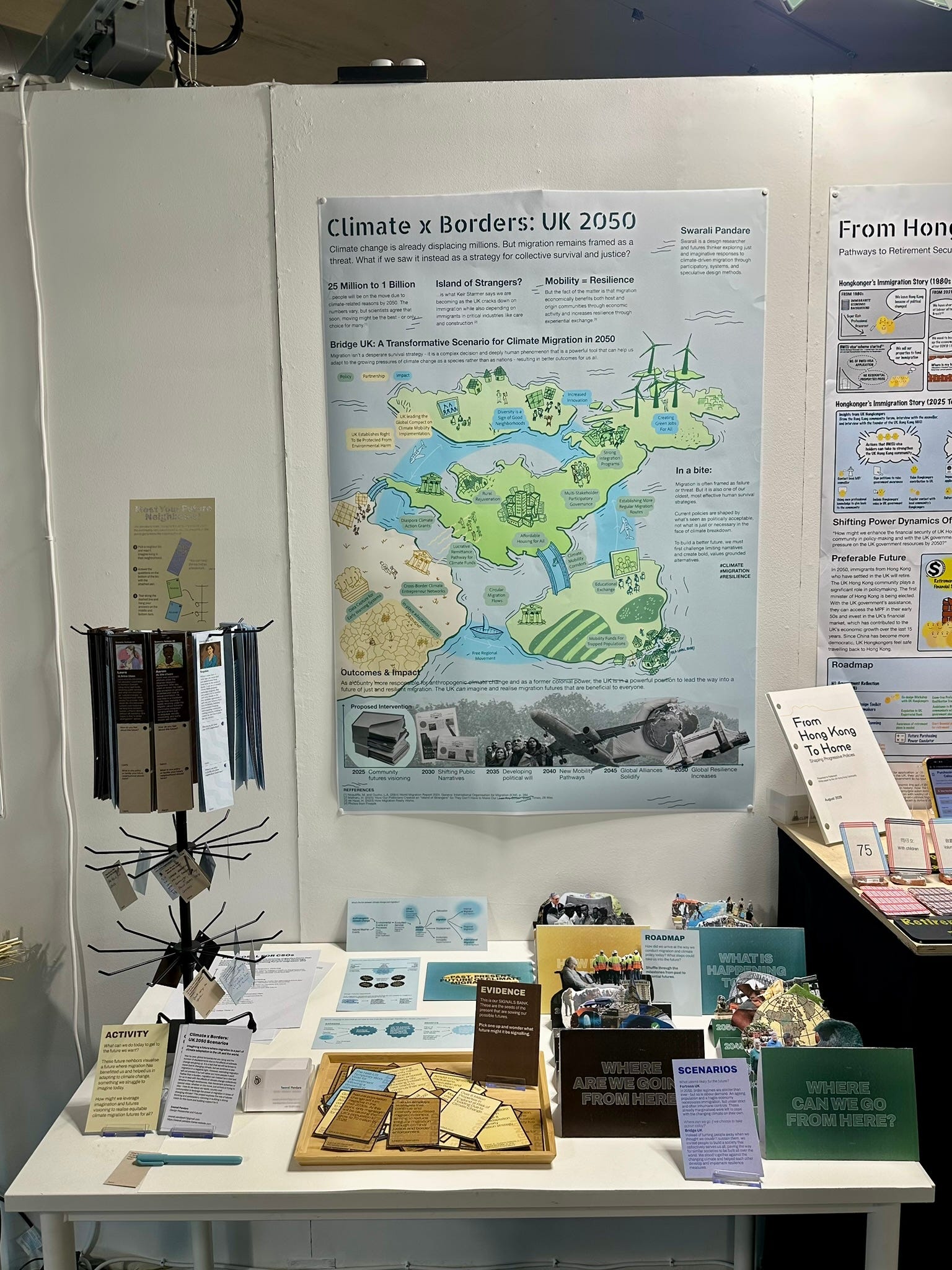
Climate x Borders: UK 2050 by Swarali Pandare ties together two subjects we may not associate as being related — climate change and migration. Swarali asks us to imagine what steps we can take now to enable more preferable migration futures particularly because climate instability will be a likely driver of displacement in future decades. Swarali is correct to observe that “our current restrictive policies will do nothing to adapt to this change in human mobility, rather only imperilling people on the move to safety.“ 🧳
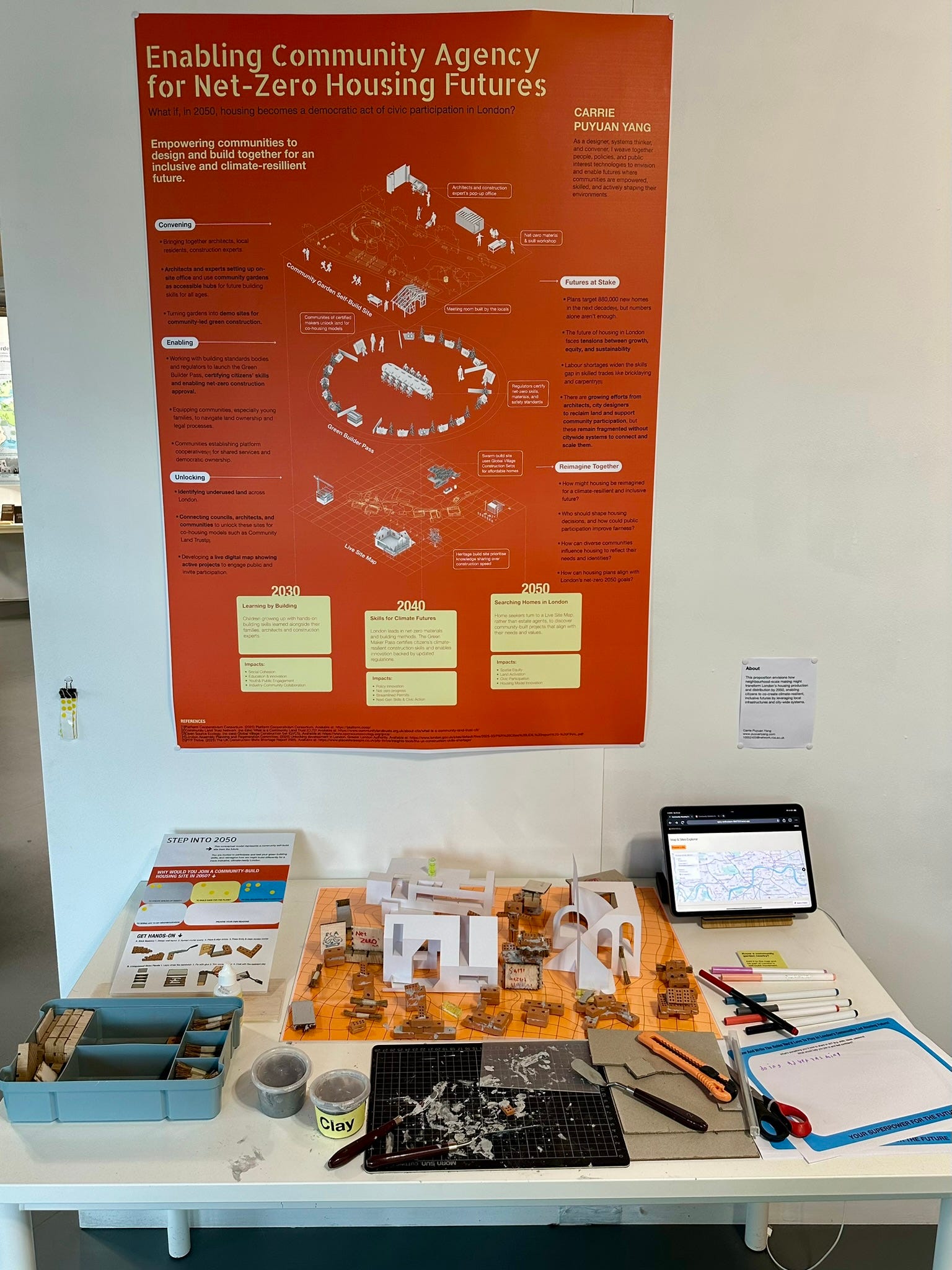
Enabling Community Agency for Net-Zero Housing Futures by Carrie Puyuan Yang asks searching questions about who is building our housing needs: are there ways the decision making for urban futures can be organised as part of a democratic act of civic participation? What role could neighbourhood scale building take to provide more of London’s housing needs? Can we unlock alternative ways of building by training and enabling citizens to self-build, either individually or through platform cooperatives? 🏠
Design Researchers In Residence (July)
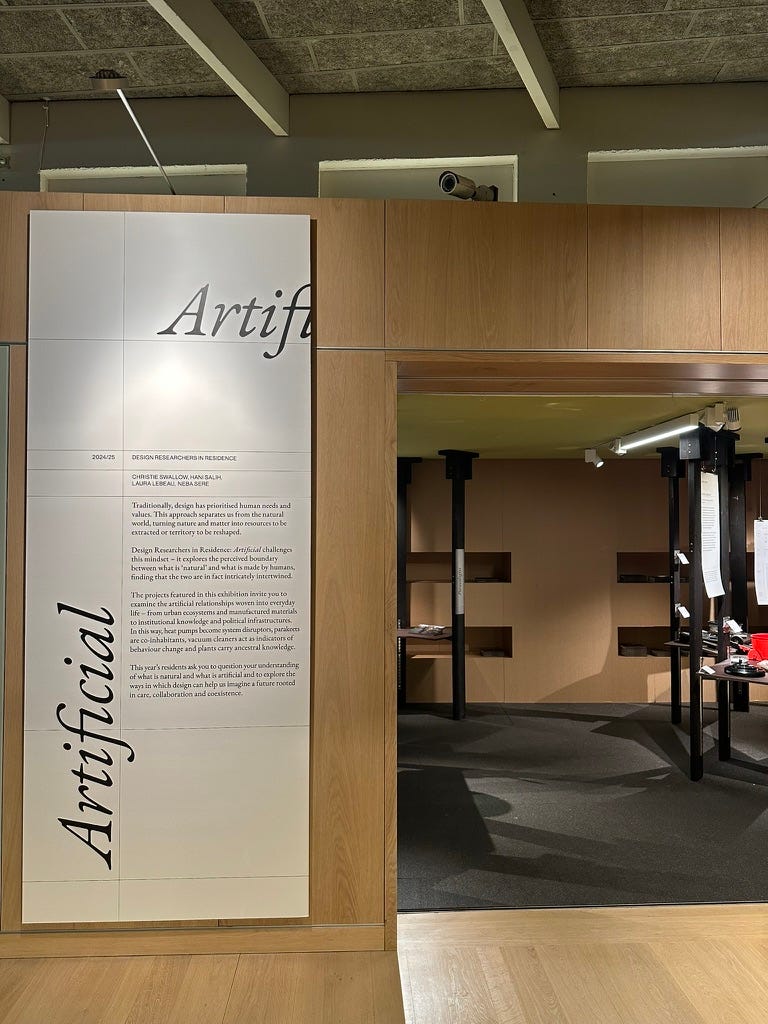
One of my highlights of the summer is the annual Design Researchers In Residence exhibition at the Design Museum. Each year, the museum funds four early career design researchers, selected from an open call, who are resident for eight months before presenting their work in an exhibition over the summer. The 2024/25 cohort responded to the theme Artificial.
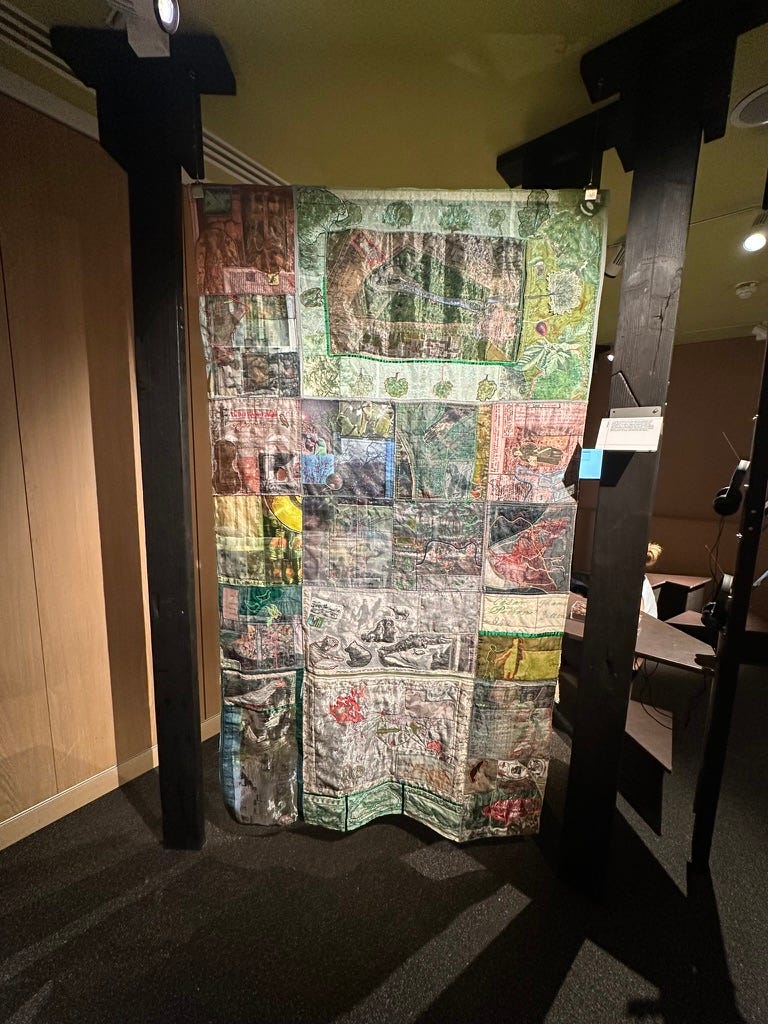
Christie Swallow presented “Paracologies” which deconstructs the meaning of nativity and belong through one of London’s most colourful avian inhabitants — the parakeet. Debunking myths about their recent arrival, Swallow’s project focuses on more-than-human communication and embodied research to explore how we can share our city spaces more harmoniously and question the artificial construction we place on natural ecologies.
Hani Salih presented “Hot Mess” which pulls apart the complex web of rules and planning regulations that unintentionally hampered the rollout of heat pumps in the UK. Through this seemingly simple home modification, whose takeup was enthusiastically encouraged by recent governments, Salih’s work surfaces the contradictions and tensions working at odds between local, regional, and national levels — and imagines how an alternative system could work if it took inspiration from naturally occurring ecosystems.
Laura Lebeau presented “Harmless Appliances” which dissects a symbol of British domesticity — the Henry vacuum cleaner. Lebeau investigates the genesis of its construction and by attempting to make a version with home-made materials, asks us to question why we need such distributed supply chains and what an alternative product could be if it could be made or repaired locally with less reliance on complex chemicals and manufacturing.
Neba Sere presented “Ancestral Plants: Anarchive” as a provocation to decolonise our understanding of plants, and interrogates the knowledge systems that have produced the taxonomies that have shaped so much of how we perceive the natural world. Sere tells us the story through five plants — bananas, cocoa beans, coffee, palm oil, and sugar — each central to our diets which were economic concerns in the colonial expansion of the British Empire. We come away with a new understanding of these plants informed by oral histories and indigenous knowledge systems.
The Spaces Between by Where Are The Black Designers (August)
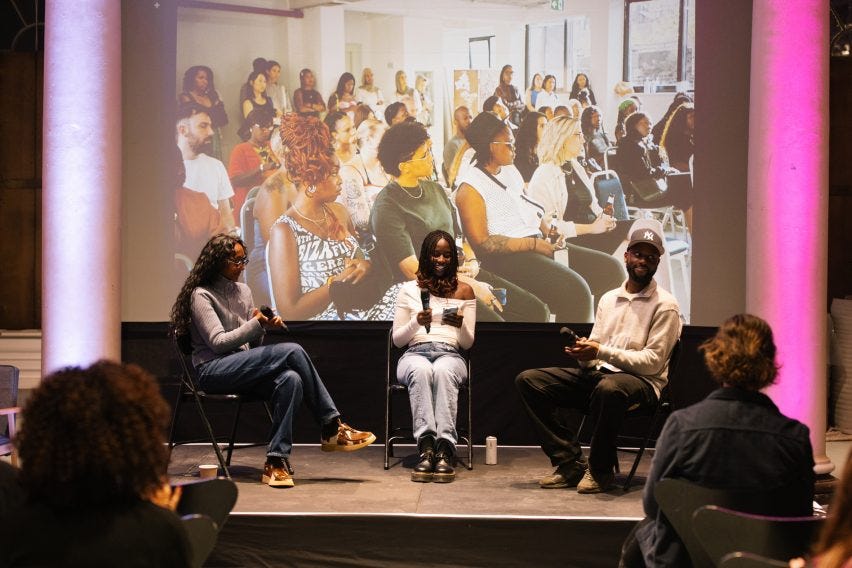
The Spaces Between was the first in-person festival organised by Where Are The Black Designers? that was due to take place at the end of August in London. I was really looking forward to being involved and had written a talk for the event, but the event was postponed until 2027 because of funding withdrawals.
My experience of speaking at conferences and meet-ups, large and small, has given me an insight into the pressures on organisers across Europe, in the UK, and London in particular.
It has been thrilling to speak on-stage in front of packed auditoriums, but the glamorous image that is projected often belies the pressures of making events happen.
In the UK, and London in particular, inflation and rising energy costs have sent the cost of venue hire spiralling upwards. The small margins for breaking even have almost completely vanished for independents — unless they also massively increase their ticket prices, which excludes freelancers, young and early-careers people, those on low or no-income, and students.
Over the last three years, I have attended and spoken at many sold-out or near sold-out events which are widely recognised as being successful with renowned and international speakers; yet time and again, organisers have privately shared with me that they had been on the brink of cancelling because of a shortfall in ticket sales which would jeopardise their financial viability — but most commonly that they made a financial loss after the event which they have absorbed personally or through their company.
Independent event organisers — by which I mean conferences that are not offshoots of larger corporate brands or full-time event producers — are particularly passionate about socioeconomic inclusion, and work hard to ensure their events are accessible and affordable through discounts, pay-it-forward schemes, and scholarships. But protecting low-price tickets means filling the revenue gap with an injection of money from somewhere else — and most often, that money comes from corporate sponsorship which is increasingly difficult to secure as companies tighten their community or event sponsorship budgets.
Burnout and anxiety are serious problems facing independent event organisers (many of whom do this in addition to their day job) in an industry with little to no mutual or structural support — and the tension never really subsides until the last delegate has left at the end of the conference’s closing address.
All of these factors have conspired to leave a global city as populous, diverse, and innovative as London with a dearth of events for critically engaging with systemic issues affecting technology, online culture, and digital design untethered from corporate capture. It is frustrating to witness how a lack of curatorial ambition and the need for financial security has converged to mould the agendas of so many technology conferences to become corporate talking shops about AI, AI, and more AI.
It was such a contrast being a fly-on-the-wall observer during the SXSW takeover of Shoreditch [Disclosure: Where Are The Black Designers? contacted the organisers to protest the unaffordability of tickets in the lead up to the event. A few months after their initial contact, they were offered a small number of complimentary passes which is how I got to go — however, I want to make very clear that the opinions I’m about to share below are my own].
SXSW London is backed by an investment fund that has bought the rights to its name for the next 10 years and hopes to turn a profit by year three. From this parallel financial realm, London’s conference scene feels like it exists in two realities. The scale and ambition of this all-week festival was limitless — they even persuaded King Charles to drop in!
Looking past the often chaotic queuing — it was their first year, so I’ll give them grace — there were some fantastic panels and talks with genuinely inspirational speakers. The downside was with the cost of the festival passes which started at £750 + 20% VAT. The prohibitive cost and absence of publicised concessions at SXSW London dissuades and immediately excludes the young creatives who need to be in these rooms the most — these are the people who are most likely to be under or precariously employed, saddled with five figure student loans, or frustrated by the shrinking number of entry level digital creative jobs that so many organisations represented at SXSW are savagely cutting in a bid to chase their AI fantasies of automated creative productivity.
So my request to you is simple. Take Sophie Koonin’s advice and go to an independent conference — they are often the places most willing to give space to first-time speakers, invite less conventional ideas, and have the bravery to be critical about our industry.
Buy your conference tickets as early as you can so organisers know they will have an audience. Advance early bird ticket sales exist for a reason — they help organisers pay for venue hire which has to be secured months in advance. Advance ticket sales also reassure organisers that they will be able to afford production staff, book and compensate their speakers. Yes, I know you can watch the videos on YouTube for free, but the serendipity occurs when you are in the room; the opportunities arise from conversations you may have.
Remy Sharp of Brighton’s ffconf put it so well — this is so much more than being sent solo so you can transactionally “report back” to the rest of your team the following Monday.
Writing this post has made me realise how many of the collaborations and opportunities I have had this year, and will continue to have next year, have been a result of serendipitous encounters and chats I have had at conferences — before, between, and after sessions; at coffee breaks, at lunch, or over shared dinners.
Go to an independent tech conference next year, because at this rate there may not be that many more in years to come. To make it easy, here is a roll call of some that will be happening around the UK next year:
State of the Browser (London, February)
Softer London (London, March/April and ongoing — check their socials)
All Day Hey! (Leeds, May) 2026 is their tenth and final conference… 😭
Pixel Pioneers (Bristol, June)
WebDevConf (Bristol, October)
ffconf (Brighton, November)
Other special mentions for:
UX Camp Brighton (Brighton, April) they won’t be running in 2026, but will be back in 2027.
Ladies That UX Brighton — who ran the 2025 edition of Talk UX in September. LTUX Brighton organise frequent meet-ups and talks throughout the year.
Look out for what Content Rising do next.
Front End North (Sheffield, July) will take a break for next year (at least).
The Spaces Between will be back in 2027.
Identity 2.0 at Somerset House (September)
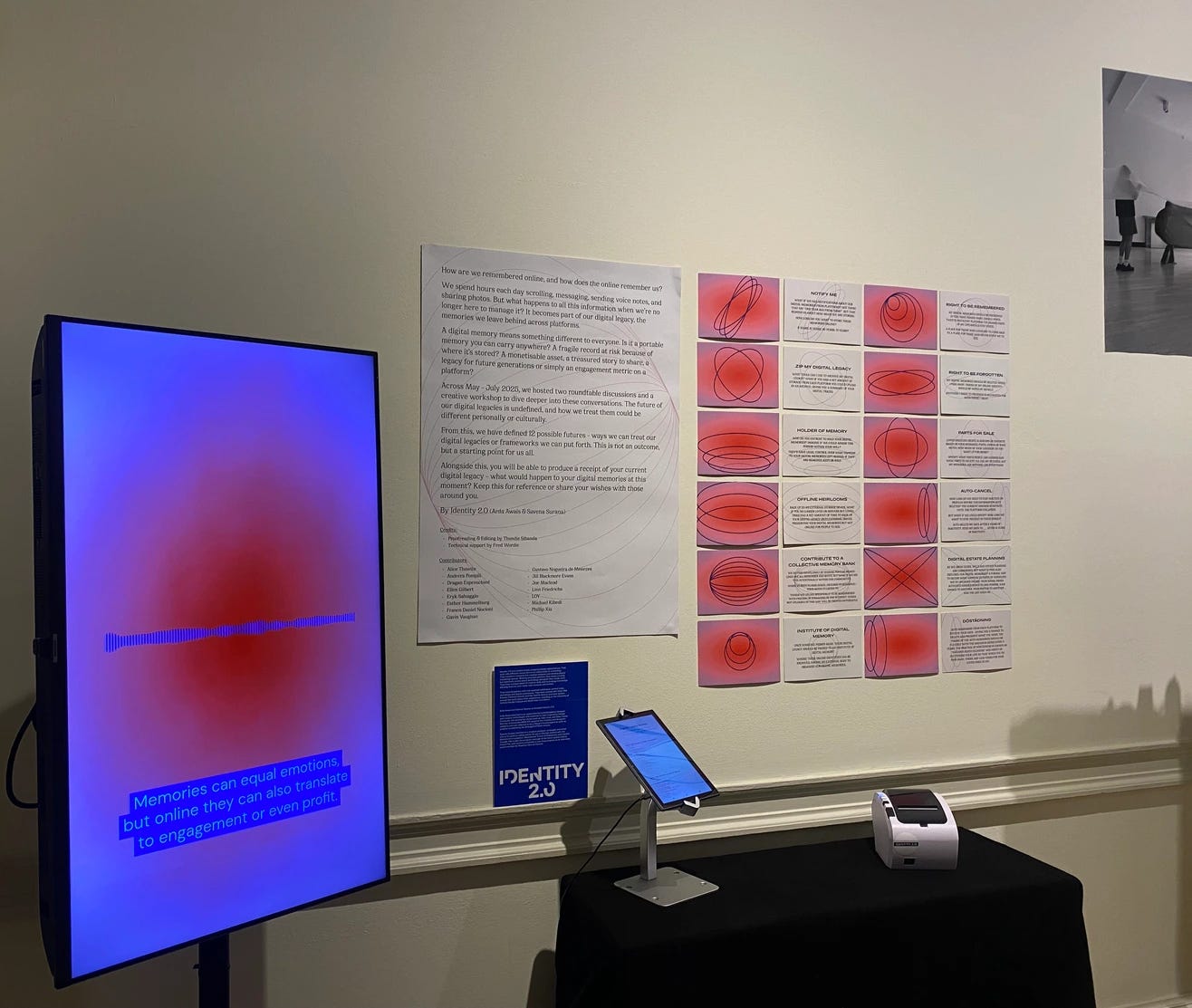
Identity 2.0 are a London based creative studio co-founded by Arda Awais and Savena Surana in 2018. They have established a reputation for asking critical and searching questions about the social impacts of technology in our lives, and presenting their work in immersive and participatory ways.
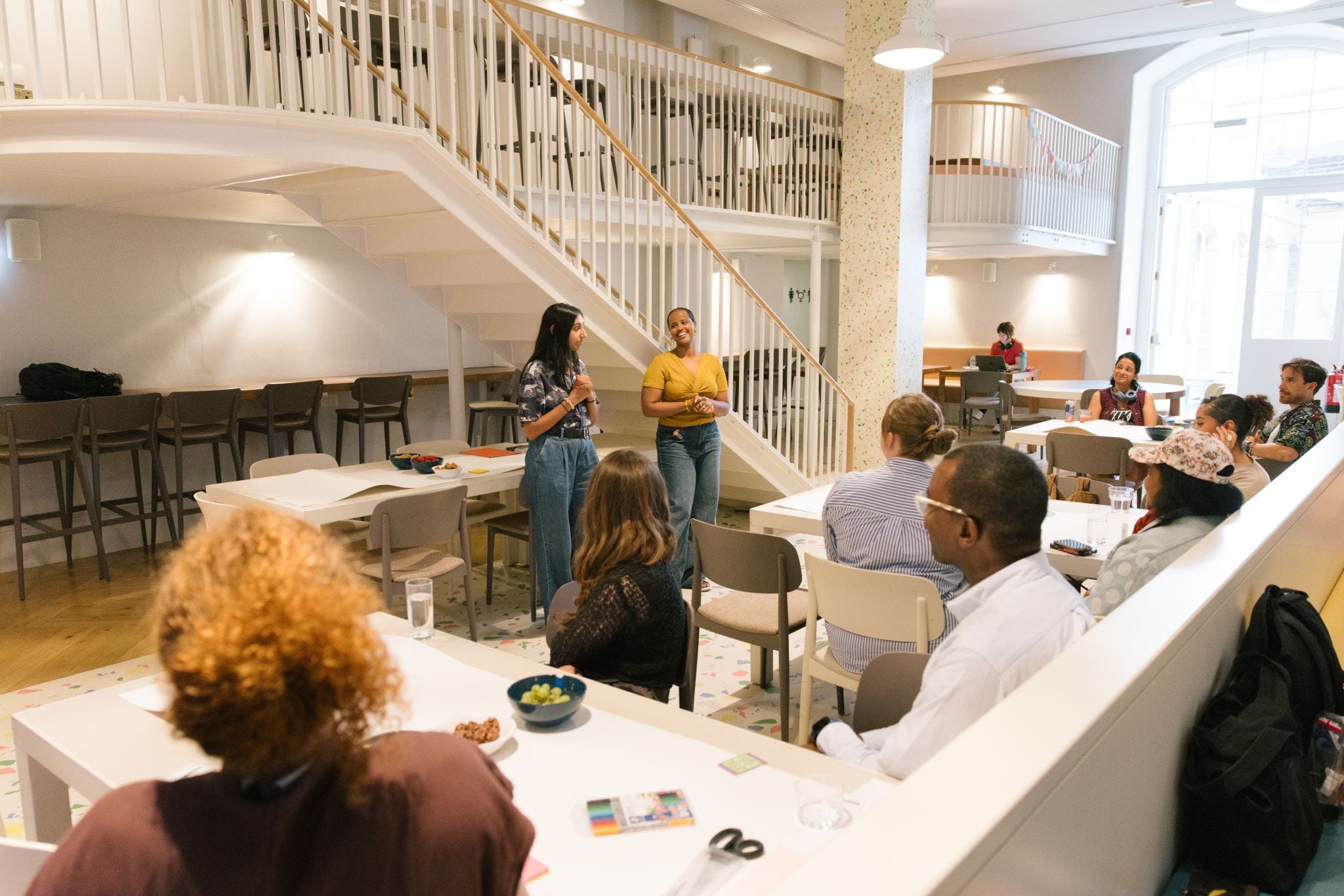
Earlier this year, Arda and Savena invited me to take part in one of their research roundtables which they co-chaired with eight researchers and technologists each time. I also went to their digital legacy workshop in July (pictured), a group exercise they facilitated so that we could all articulate our wishes more clearly about our own digital legacies.
How are we remembered online? is a project they created, funded by the Talent 25 Award they won earlier in the year. Arda and Savena’s project was shown at Somerset House during September, recognising everyone who contributed to the roundtables and workshops they led. In the exhibition we are asked to think more meaningfully about our digital legacies and how we can reclaim agency about the data we leave behind after we die. 📝
Hype Studies (September)
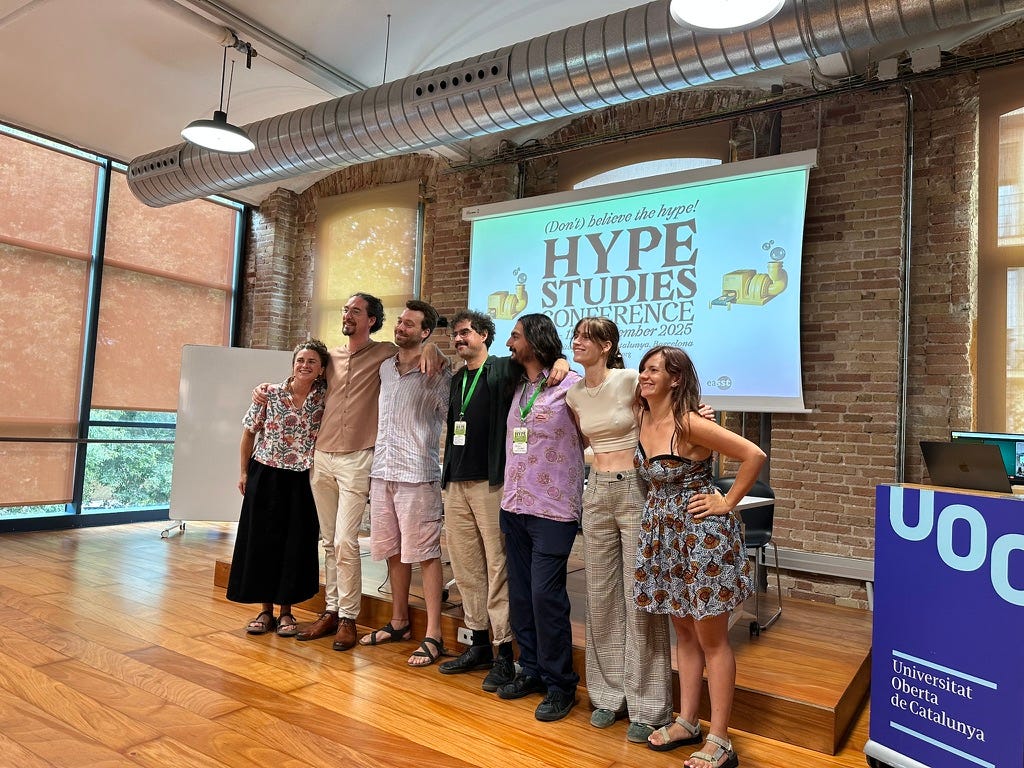
From 10–12 September, I attended the first Hype Studies conference, subtitled “Don’t Believe The Hype”, at Universitat Oberta de Catalunya in Barcelona. This interdisciplinary conference gathered over 400 people (of which approx. 100 in-person) in a hybrid event that took in a huge variety of subjects: Isabella Wilkinson of Chatham House pulling apart the hype of green AI and sovereign data; Valentina Marun and Juli Groshaus of Vandals running a workshop on how to critique hype as a systemic phenomenon — which our group chose to direct towards the memetic and cultural phenomenon of Labubus; to Masafumi Nishi from University of Vienna critiquing the never-quite-here promise of nuclear fusion, and so much much more.
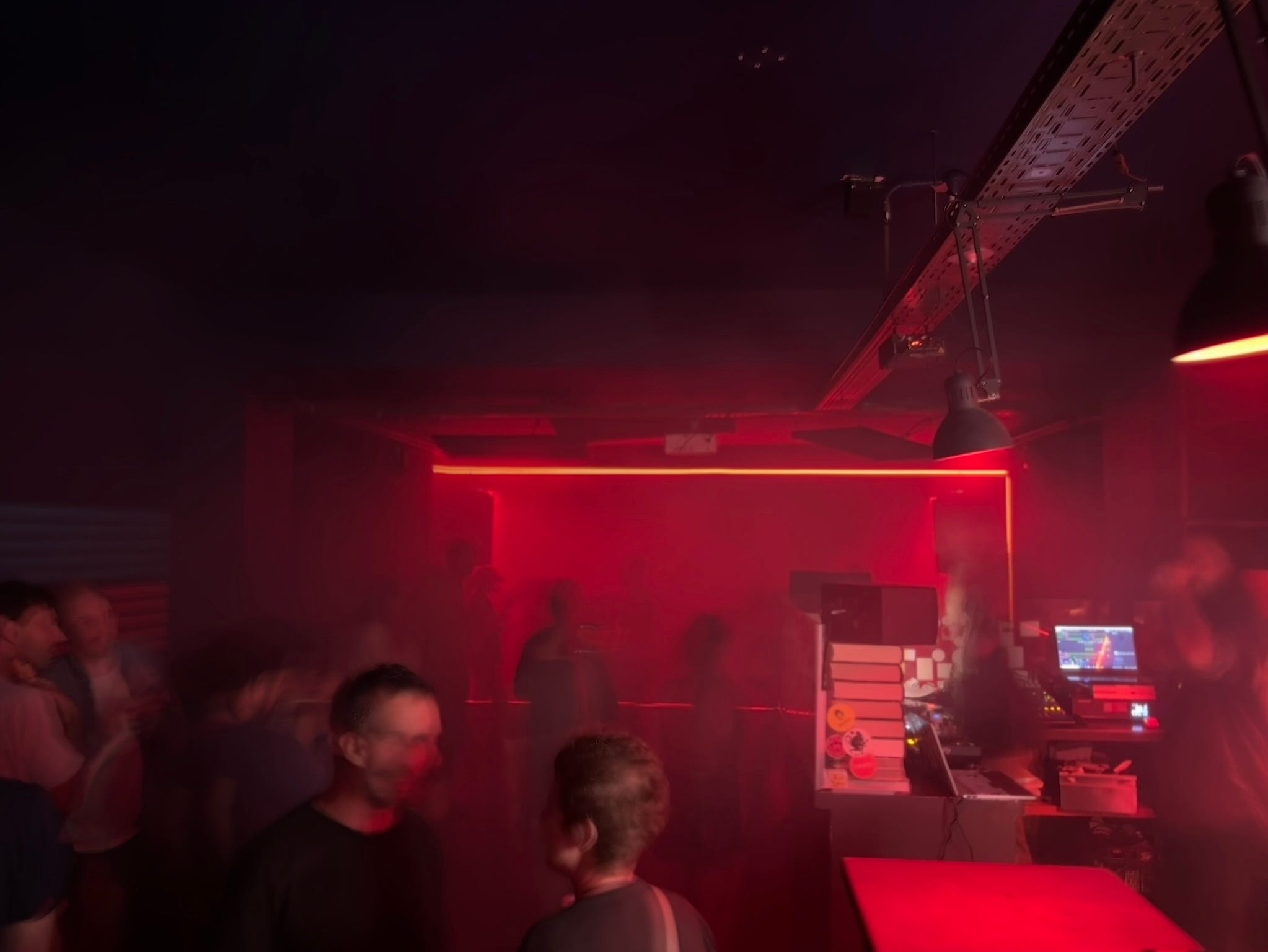
Oh, and they throw a good party too! 🕺🏾
The Oneliness Project (September)
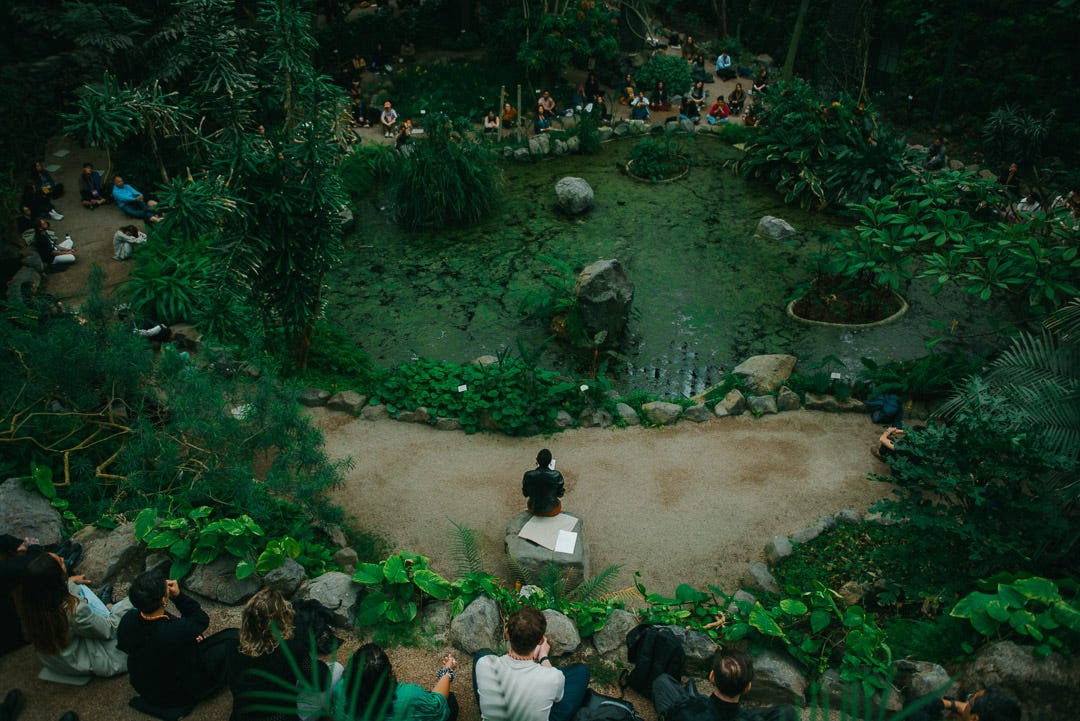
I first met Monika Jiang at The Conference in Malmö last year where we were both speaking — Monika on day 1, and me on day 2. I also ran into Monika again when she was hosting an immersive meditative activity on the final day of Future Days earlier this year. It has been a joy to spend time getting to know Monika since then.
As technologists, we naturally focus our attention on measurable or tangible harms of technology but through The Oneliness Project, Monika delves deeper to ask how and why we live such superficially full lives while being so disconnected from the people around us. Monika presents her work through talks, workshops, gathering people for shared meals or meditative sessions — and added to this list is an eponymous podcast (I also contributed a monologue to its launch episode). Have a listen! 🪴
Folkestone Triennial (September)
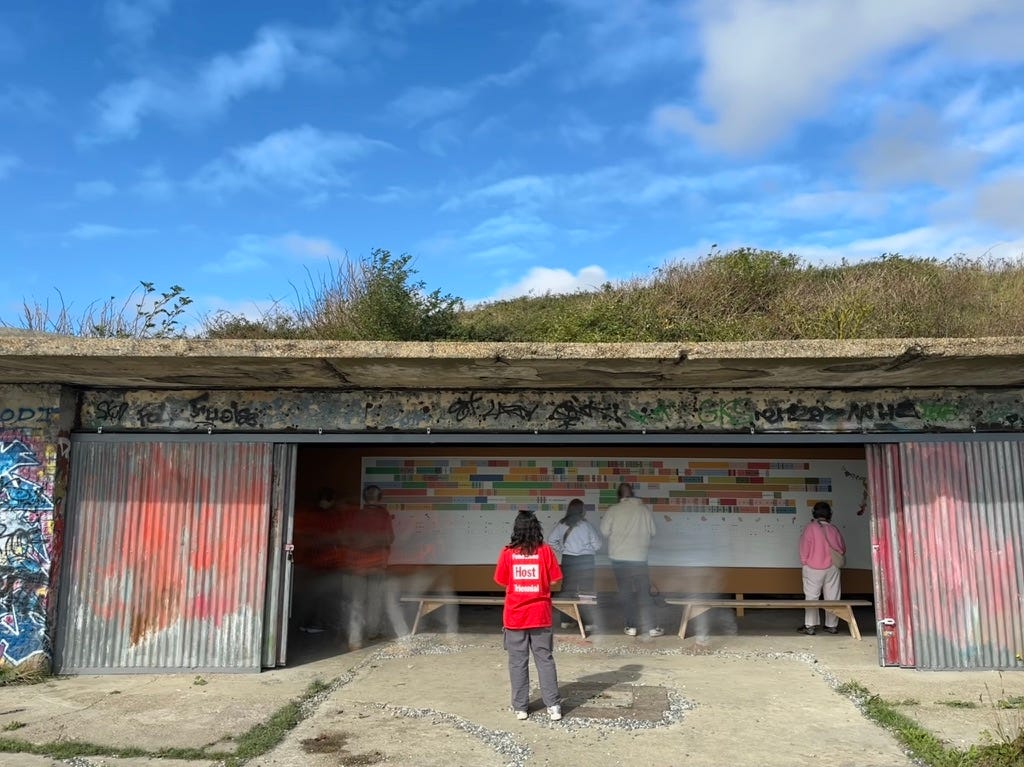
During a final blast of good weather in September, I went with fellow futurists, Isabel Serval and Kamila Iżykowicz, to visit the Folkestone Triennial — a multi-site display of public art that takes over the Kent seaside town once every three years.
Many of the sculptures and installations were clustered around Folkestone Harbour, but more intrepid visitors could find some hidden gems up on the hill. Love (Warbler Remix) by Hanna Tuulikki is a sound installation nestled in a cliff edge bunker. Taking inspiration from the marsh warbler, a bird which absorbs and repeats birdsong and other sounds it encounters during its migration from South Africa via the Arabian peninsula to Europe and Britain, the work speaks powerfully to the meaning of nativity and the ways in which we absorb cultural influences.
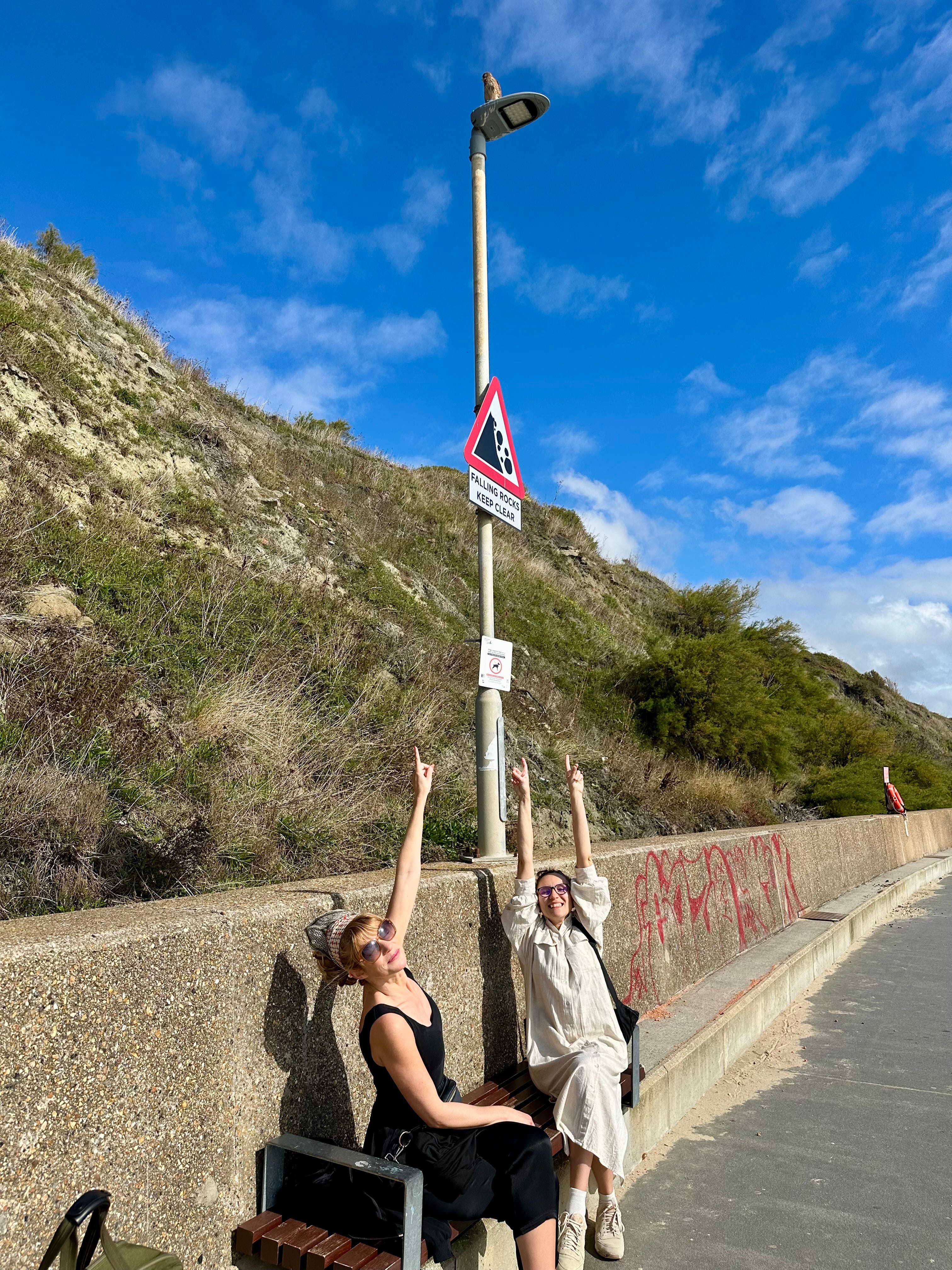
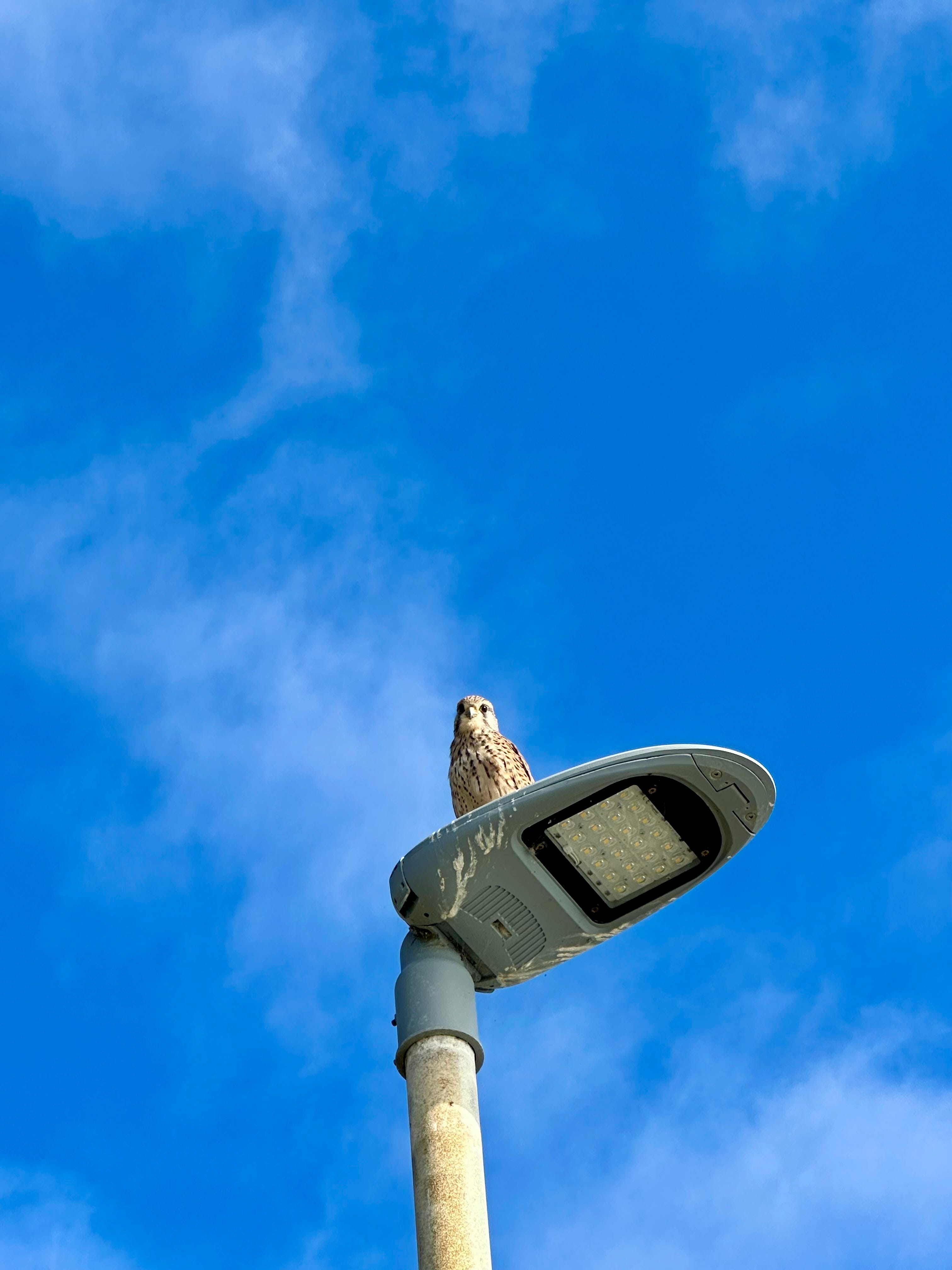
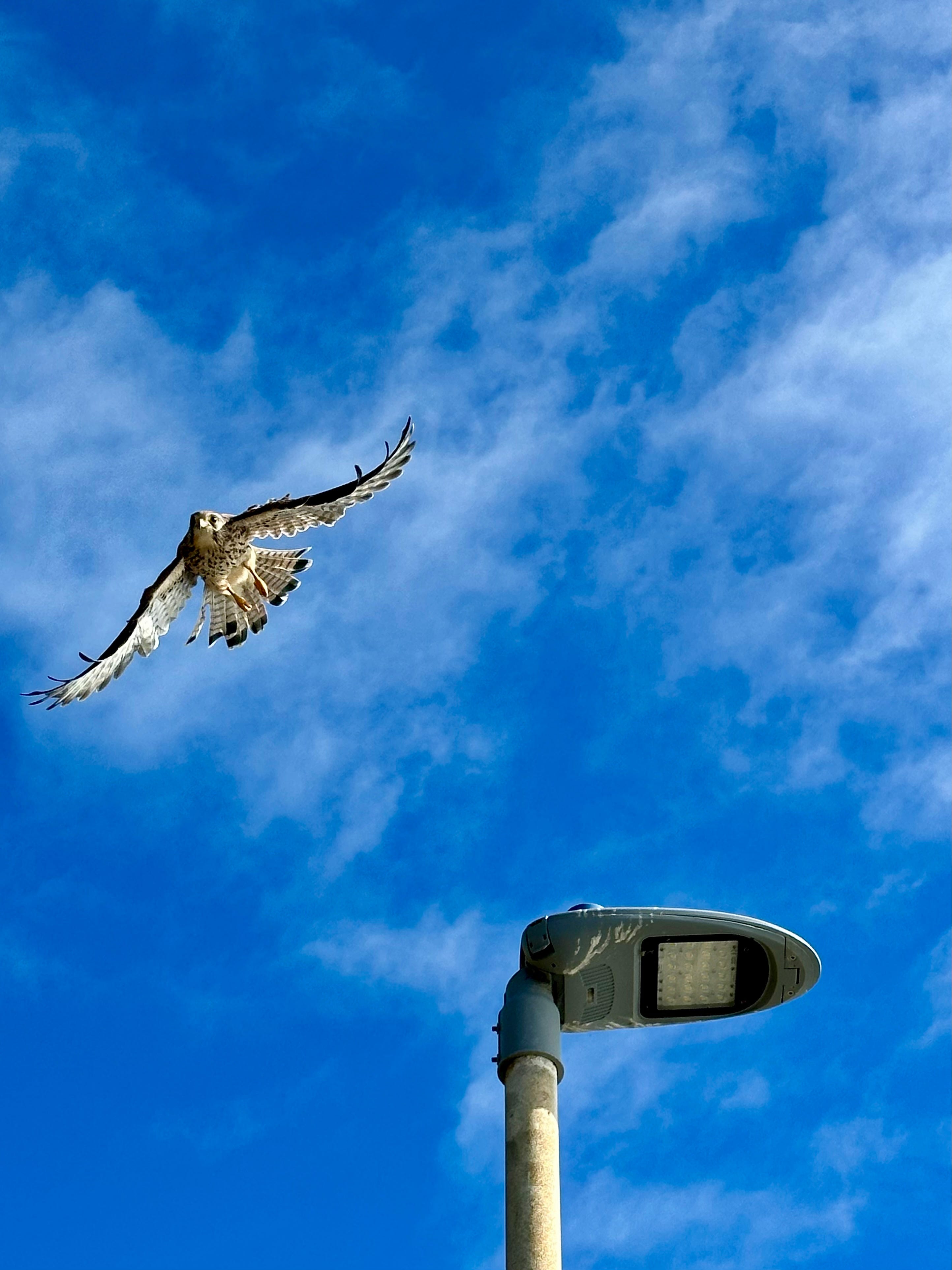
As we sat by the harbour, we were paid a visit by an inquisitive kestrel: one of the most stunning birds of prey in these British Isles. If you ever see a kestrel hovering you won’t believe your eyes. This kestrel was quite comfortable listening in on our conversation, looking down every so often before taking off after a few minutes! 🦅
Writers IRL (September)
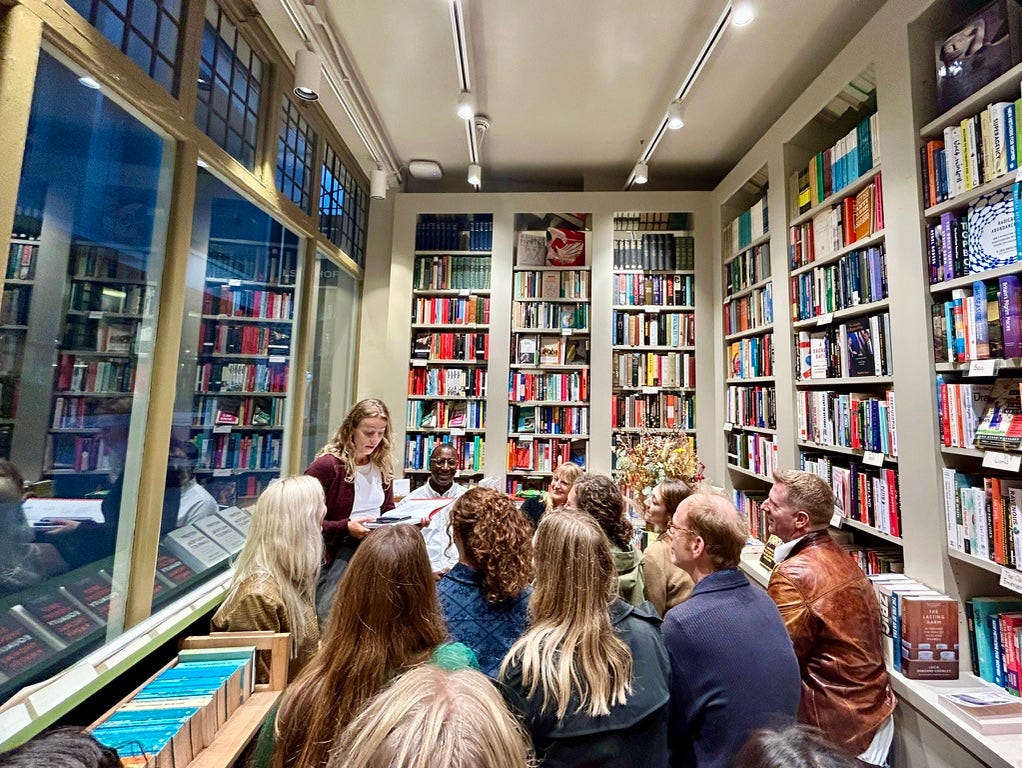
It’s not often I talk about my writing process, so I am always a bit bemused that anyone would be interested to hear about my writing methods, inspirations, or how I do my research.
I was interviewed alongside Ros Barber, who is the renowned and award winning author of The Marlowe Papers. We both shared insights about our writing process and how we found our audiences.
When I started First & Fifteenth, I stumbled across two different posts that were looking to gather people in London who write on Substack. In January 2024, there was a meetup being organised by Lex Hearth. There were about 7 or 8 of us (I think), and we sat in a circle in the upstairs room of The Owl and Pussycat in Shoreditch. A few days later and I was back on a train to venture north — this time to Highgate for a meetup organised by Michaella Parkes. There was quite an overlap in the two groups. Michaella and Lex hit it off in the following months and Writers IRL was born!
I have met, shared, and bonded with other poets, novelists, screenwriters and essayists whose interests range from the personal to political, spiritual to social, philosophical to polemic.
Michaella and Lex are always gracious hosts — and quite modest about their own achievements too.
Michaella is an accomplished journalist and food writer, co-producer and co-writer of RE-PRODUCTION, a play with an ensemble cast about reproductive rights that played at Marylebone Theatre last year; Michaella also has the honour of being my first guest writer on First & Fifteenth!
Lex is a DJ and producer who has her own record label, has been featured on the BBC, and has played sets across London, and far flung places like Sydney (!!), Bali, and Amsterdam.
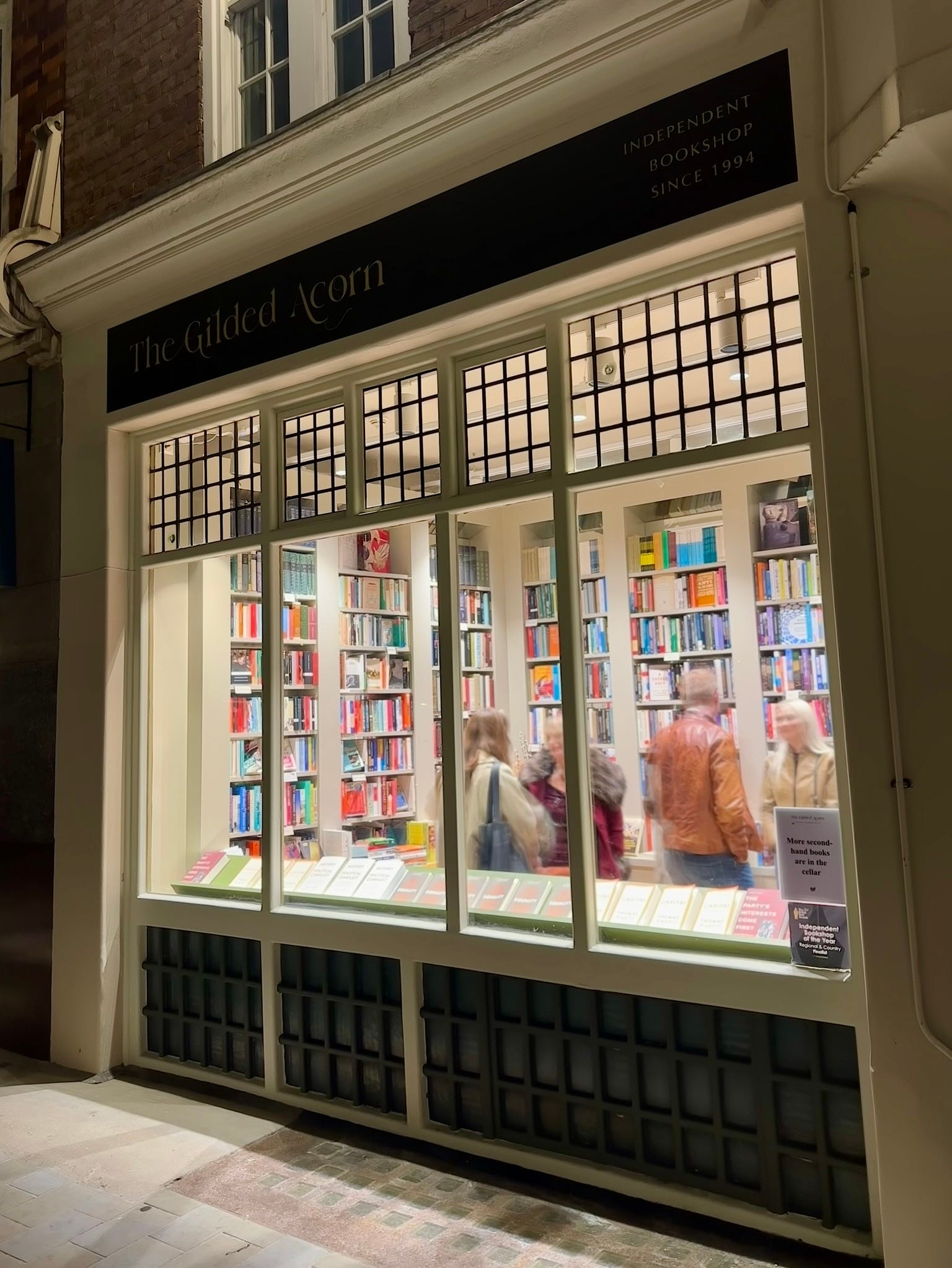
On 17 September, Writers IRL took over The Gilded Acorn which easily takes the trophy for Most Beautiful Bijoux Bookshop in London.
If you are writing, thinking of writing, or just want to hang out with writers — consider coming along to a Writers IRL meetup. It might just give you the nudge you need! 📚
Fungi As Your Futurist (October)
What started as a conversation with Jess Jorgensen from Sporesight bloomed since we first met at Future Days in April. We had been chit-chatting before, during and afterwards about all things fungus, more-than-human intelligence.
For the rest of the summer, Jess was hard at work and in contact with more than a dozen designers and researchers and these rough notes have now sporulated.
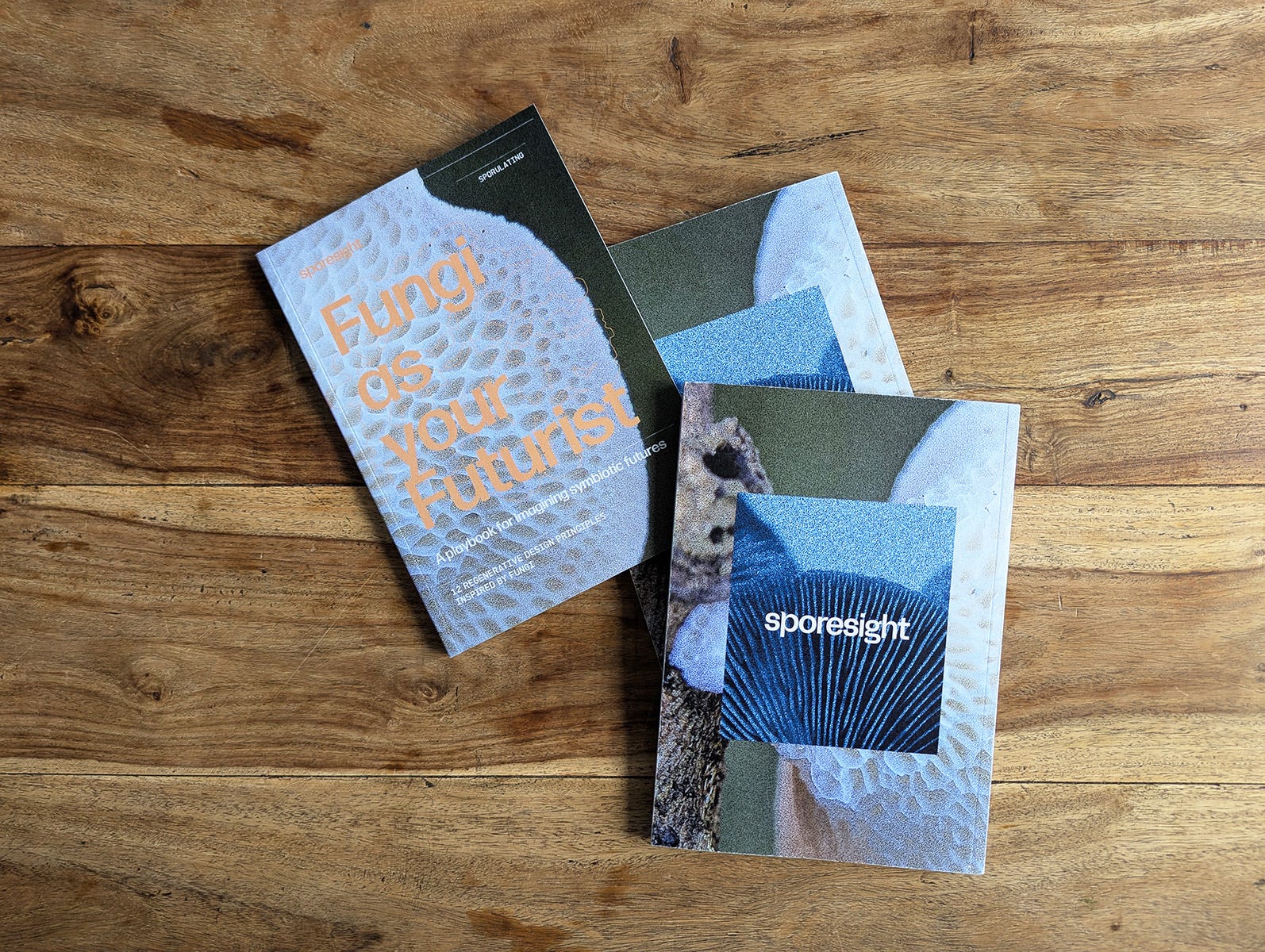
Fungi As Your Futurist: A playbook for imagining symbiotic futures is a zine that has been published in a limited run for its first edition. Digital editions are also available and discounted accessible editions can be downloaded for anyone with low or no income. The reaction has been immense so far, and Jess is building towards an improved second edition soon. 🍄
WDC2025 (October)
As Autumn arrived, I was off to Bristol to speak at the 2025 edition of Web Dev Conf, which holds the title for longest running independent tech conference in the UK.
I was one of eight speakers and I presented alongside speakers such as Henry Desroches who addressed how to win back the soul of the internet, and Salma Alam-Naylor who presented a future oriented history of the internet told from the past about the present.
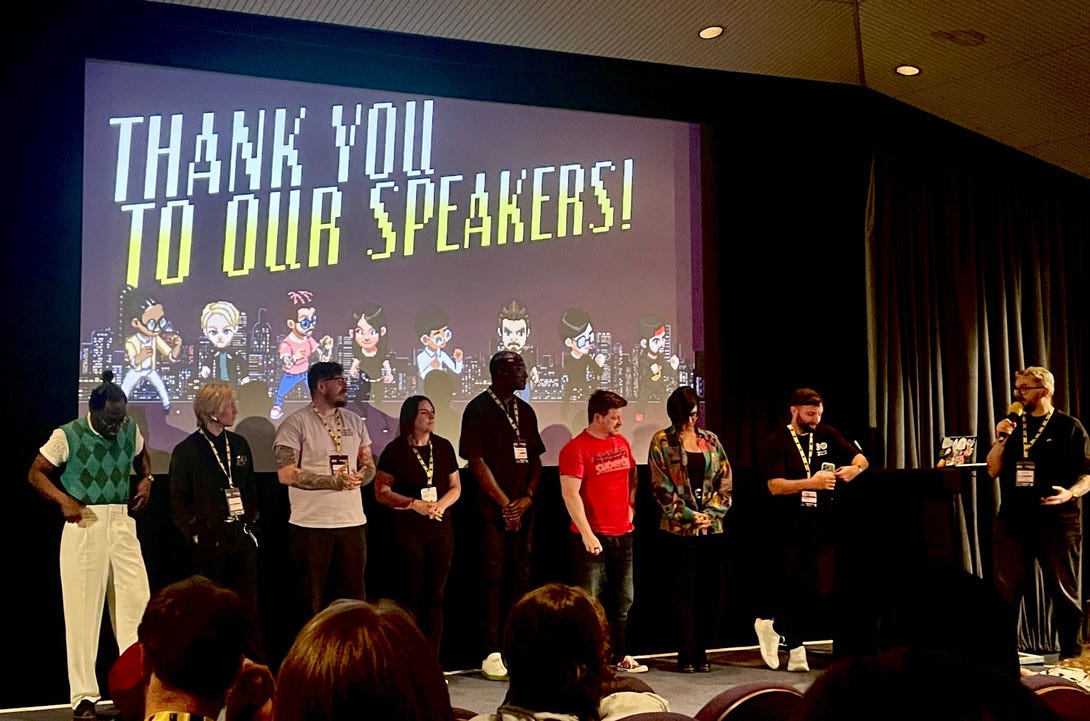
The day was not recorded, but you can watch my talk from a version I did at ffconf in 2024. Or better still, come to Web Dev Conf next year. You won’t regret it. 👾
Kerry James Marshall at the Royal Academy (October)
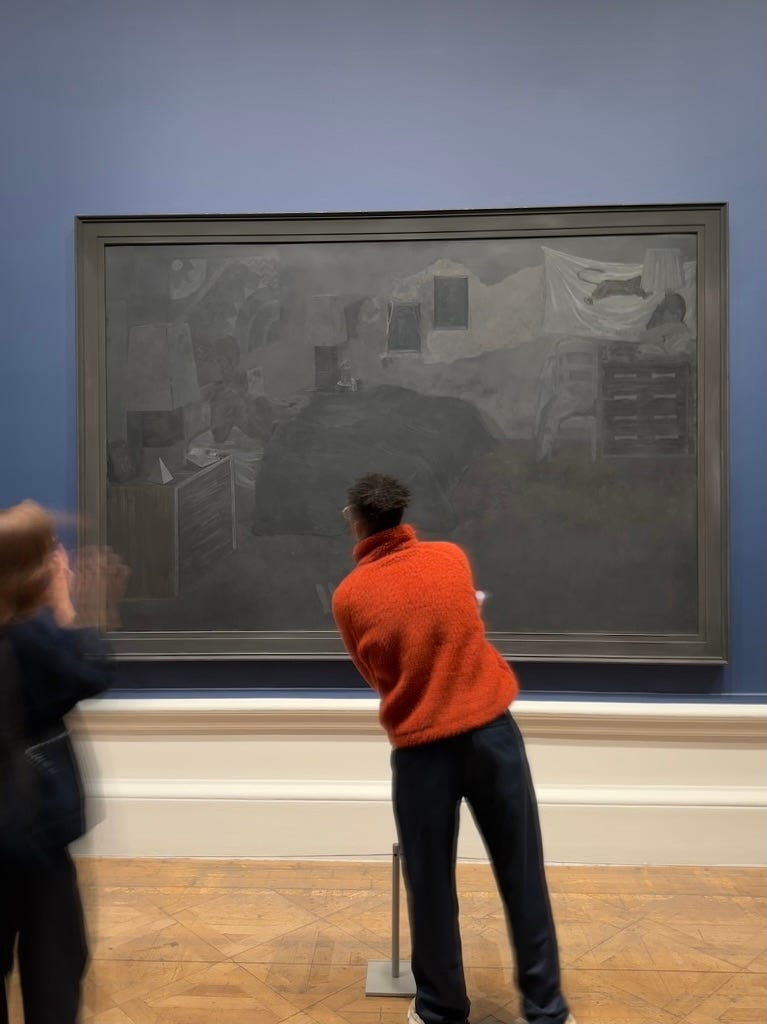
The photo at the top of this post was an accidental capture I took when I went to view Kerry James Marshall: The Histories at the Royal Academy. (Royal no. 1!) I went with friend and fellow design researcher Hani Salih who has just had his work exhibited as part of the annual Design Researchers In Residence show at the Design Museum. Hani has been busy and when we met he had just interviewed Nikole Hannah Jones of the 1619 Project for De Dépendence podcast.
Kerry James Marshall’s art blew me away. I was reasonably familiar with his work but this was the first time I had seen his paintings in real life. The complexity and layers in how he uses black was astounding and seeing a vast range of his work crystalised how his perception of Blackness — both in himself and others — has evolved over time. There were so many narratives layered in each work and so much of what was communicated was made more powerful by what he chose not to overtly depict.
A few days before, I had caught up with the online class The Epic and the Everyday: Kerry James Marshall’s Black Narratives by Black Blossoms presented by curator Mark Godfrey and co-curator Nikita Sena Quarshie. The show brings so many themes to life that I never would have noticed. I would love to go again. It’s a bit annoying that you can’t get multi-entry tickets if you can’t stretch to getting a full membership. The exhibition is on until Sunday 18 January so you still have plenty of time to visit. 🎨
The Fish and the Artist as Ecologist (October)
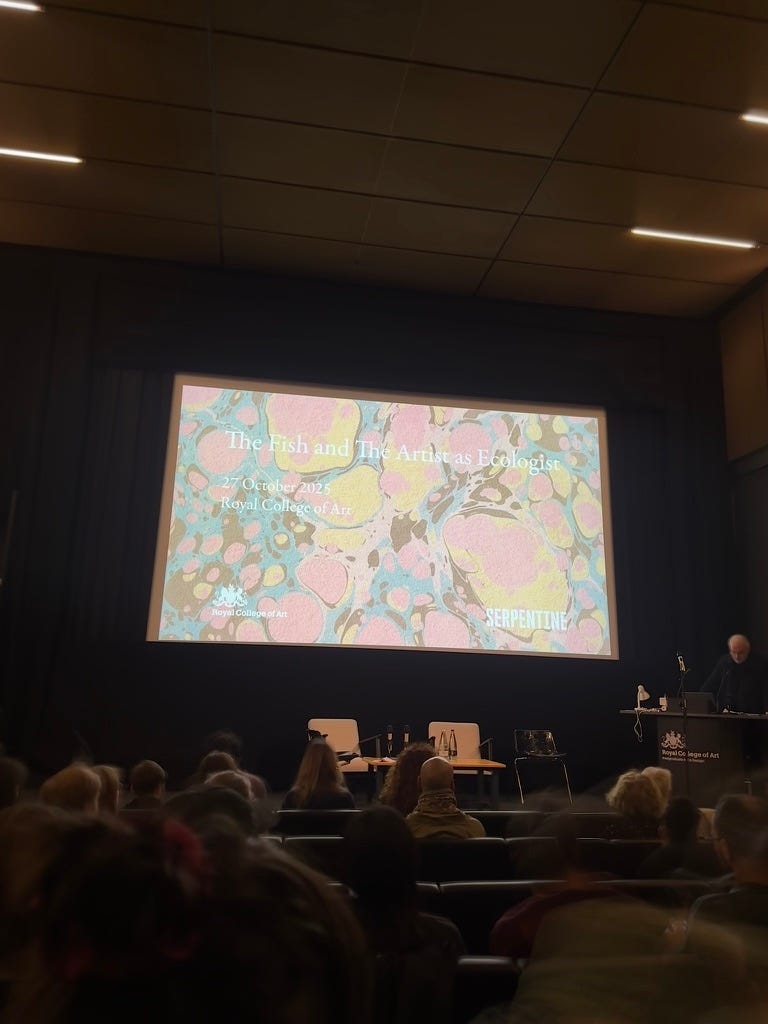
Bit of a spontaneous excursion with my friend and design futurist Sacchita Nandi to be part of this multi-book launch at the RCA — a special gathering for those with interests at the confluence of art, ecology, and other intelligences. The Artist as Ecologist by Filipa Ramos (Lund Humphries, 2025) is an examination of how artists are responding to the climate crisis in their work. The Shape of a Circle in the Mind of a Fish has been edited by Filipa Ramos and Lucia Pietroiusti (Hatje Cantz/Serpentine, 2025) and is a heavyweight volume with over 100 contributors working across the arts, humanities, and sciences.
Regardless of our chosen field, it is increasingly unavoidable to continue a practice without confronting, or at least engaging with, the implications of our collapsing climate and natural ecosystems.
After the event, I got chatting to Rosana Antolí — an artist whose work, “An Aria for the Mallard”, is currently on show at Centro de Arte Moderna Gulbenkian in Madrid until 12 January 2026. Rosana has previously exhibited at Tate Modern, and across Spain. Her practice is rooted in exploring more-than-human relationships through movement, sculpture, and music. Let me just say you will be hearing more about her work in 2026… (there’s that serendipity again!) 🦆
RCA Design Futures guest lecture (November)
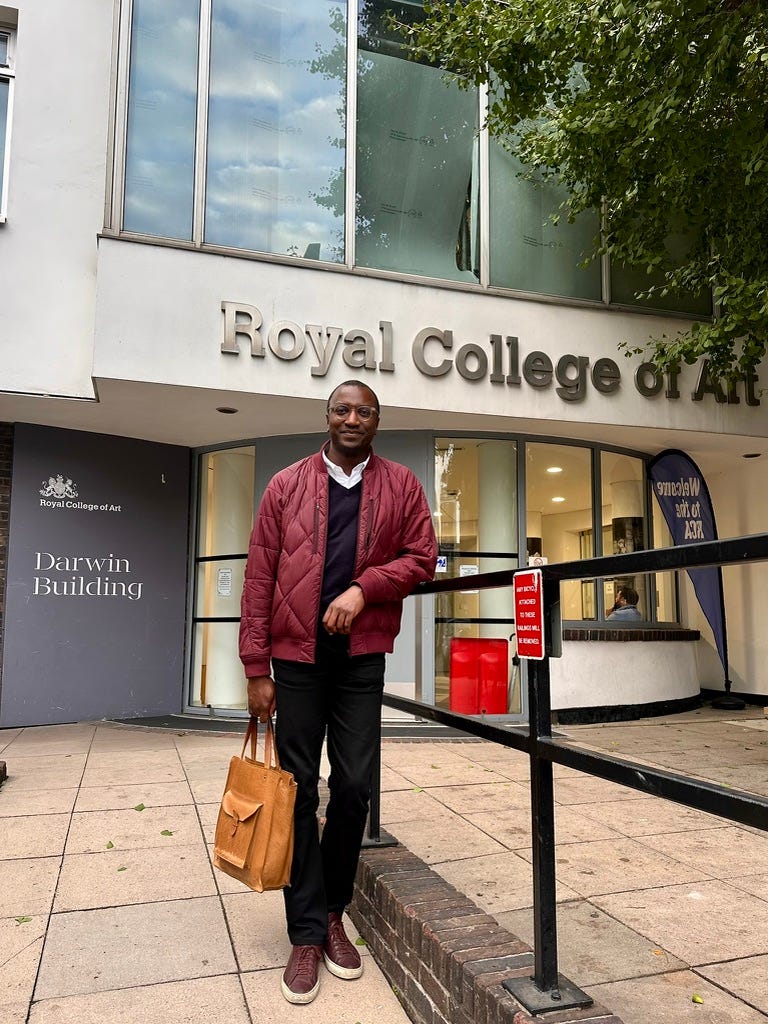
Early in November, I delivered a guest lecture at the Royal College of Art. (Royal no. 2!)
In this hour long lecture, I dismantled and reconstructed Human Decentred Design — a talk I’ve delivered at The Conference in 2024, and Content Rising in 2025 — I challenged the class to consider how ethics, design and futures ought to be critically reappraised against the backdrop of digital technology’s extractivist urge (SOIL), the narrow cultural framing we absorb that distorts our understanding of where design takes place (SELF), the inextricable link between climate justice and the countering of carceral injustice (SIGNALS), and the possibilities that can be realised through the pursuit of liberatory Black futures (SKY).
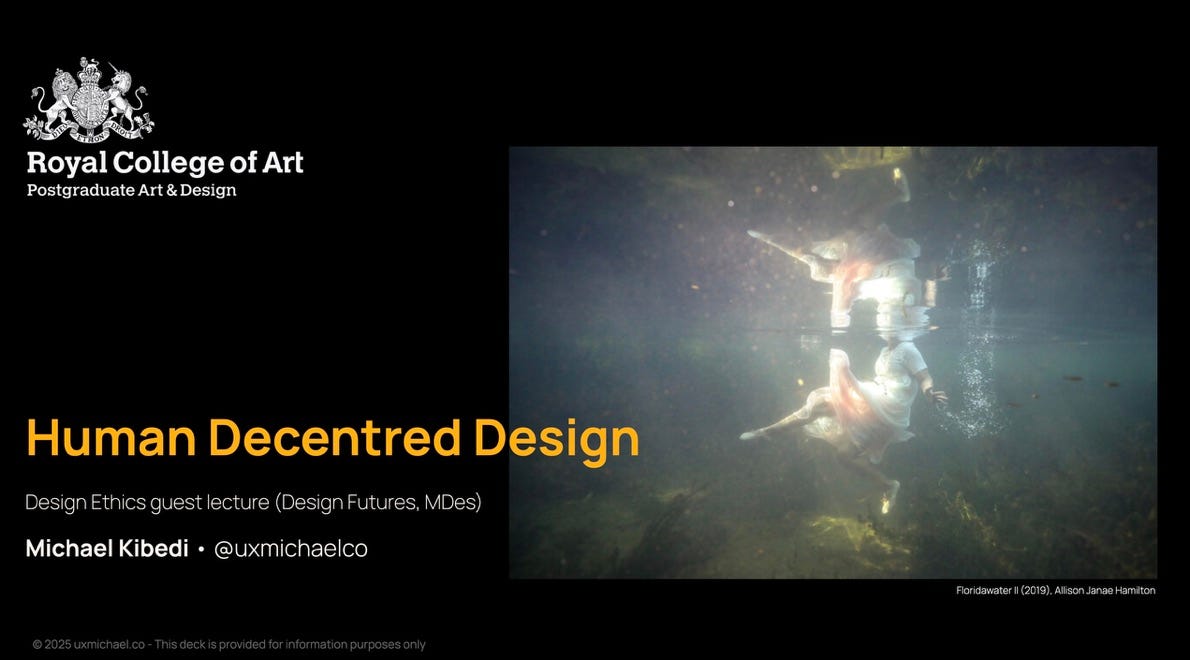
Thank you Juliana Callia-Long and Aine Petrulaityte for inviting me, and to everyone who attended for being such willing co-conspirators: conspirare (Latin), to breathe together. 🎓
Anastrophes (November)
I love when friends of mine get together and do something magical!
Check out Anastrophe Collective — a group of interdisciplinary spatial designers who seek to engage with communities on the frontlines of environmental struggle. Their first podcast just launched, in which Christie Swallow interviews Nicole Vindel. 🎉
Future Inventions Lab (November)
I get so lethargic as the dark winter nights start to draw in. One thing that keeps my energy up is when Future Inventions start a new series of their reading and research group.
Each session is motivated by a desire to decentre Eurocentric technosolutionism guided by Ari Melenciano’s Afrotectopia — who sees technology “not as synonymous with electric forms of computation but merely as an extension of human capability, and beyond that, an extension of sentient capability” — while taking inspiration from Tina M. Campt’s grammar of Black Futurity to unseat technology’s embedded patriarchal bias.
Co-run by design researcher and writer Yaa Addae, creative coder and technologist Lex Fefegha (who spoke at Future Days!), and technology researcher Uzoma Orji, the sessions run in limited series called Cycles.
Cycle One started last year and I went to classes that addressed digital colonialism and ancestral technologies. Unfortunately I missed the experimental web session and the screening of Seeking Mavis Beacon!
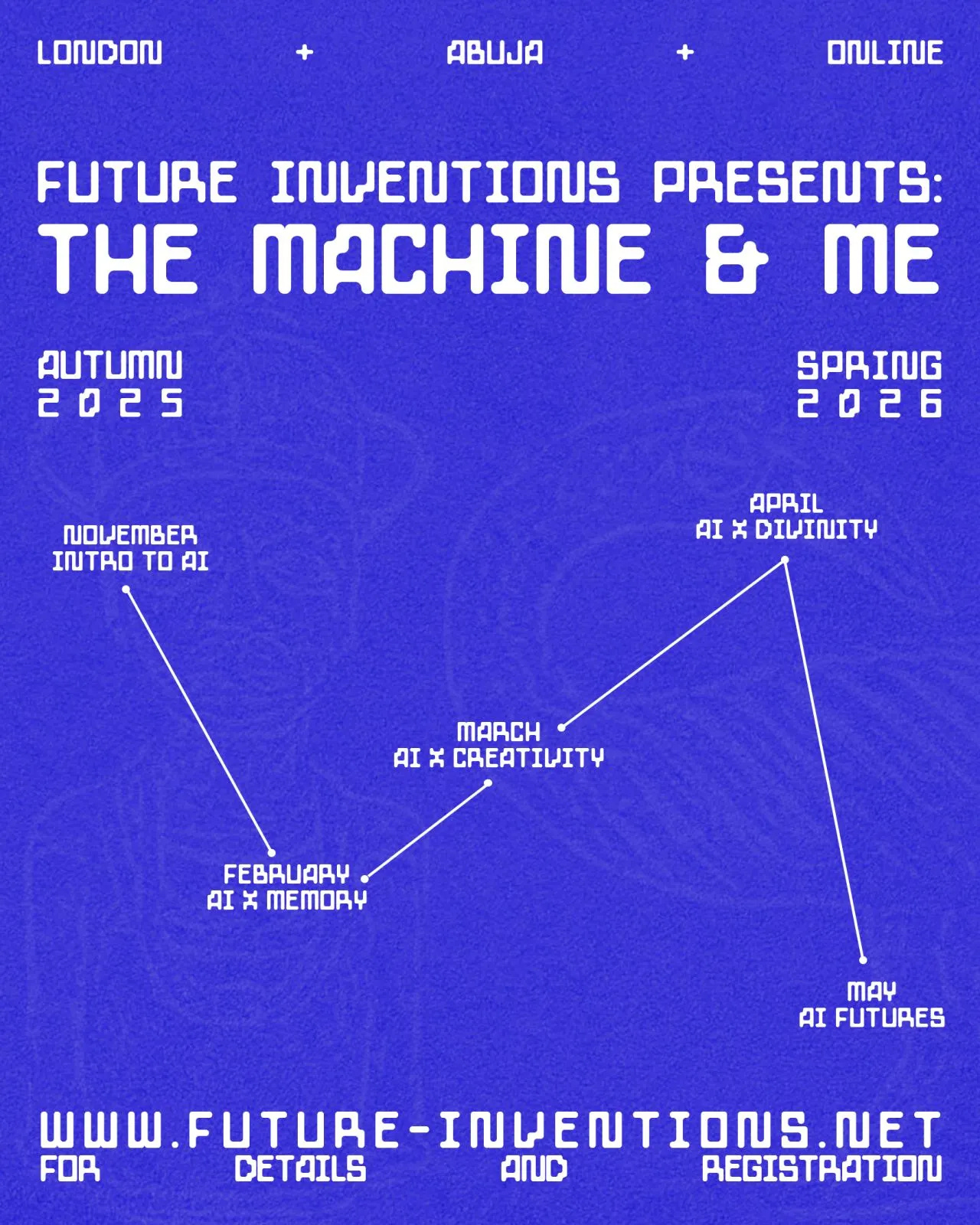
Anyway, they are back and this season’s Cycle is about demystifying AI through an artistic lens, and I can’t wait!
We were treated to a workshop by Laurent Yee who broke down the stages of data collection, training and generation in AI technology and made a fun set of workshop activities for us all to inhabit and enact these stages. To be able to critique technologies, we need to understand how they work and this was an engaging and creative way of demonstrating this.
Go to the Future Inventions website for details on the next session. 🖤
LTUX Brighton Online Seminar (November)
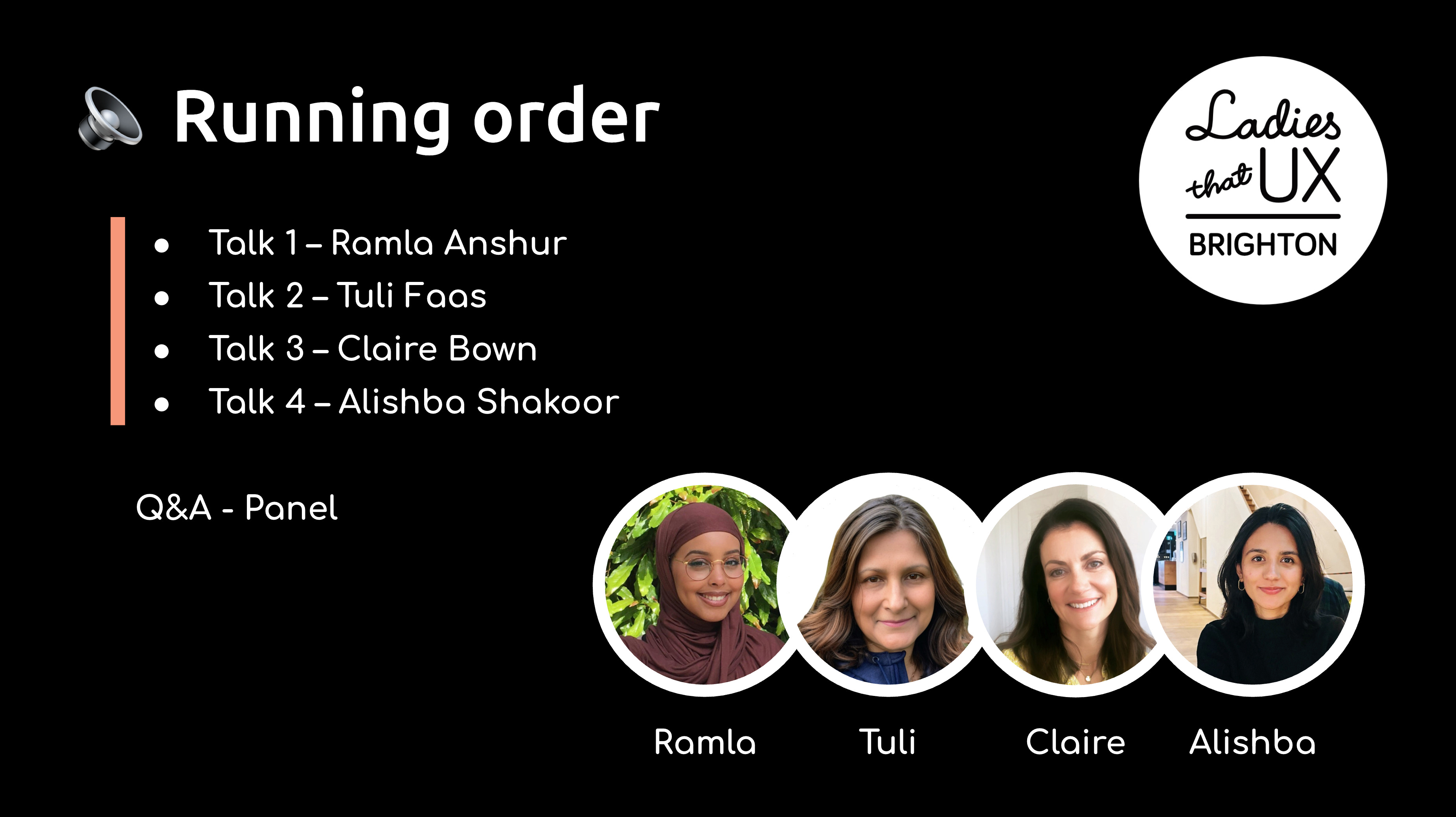
Getting near the end of the year, and I attended an online seminar organised by Ladies That UX Brighton on “AI + UX: Responsible Futures and the Human Side of Innovation.”
It was such a welcoming and mutually supportive atmosphere which underlines what I wrote earlier about the joy of attending and supporting independent tech events.
One talk that I was very interested in was from Ramla Anshur, who started the evening with a well researched presentation about how we might reimagine AI using a decolonial and ecological lens.
I have been constantly bumping into Ramla at various meetups and events (a sure sign we are thinking and researching along similar paths — she contributed to a paper recently published by We and AI called “Resisting, Refusing, Reclaiming, Reimagining: Charting Challenges to Narratives of AI Inevitability”). Ramla also offered some very thought provoking interventions during the Dark Matter Labs (Un)conference at Future Days. I hope to see her speaking again soon at a meetup or conference in the near future. 🌍
ffconf (November)
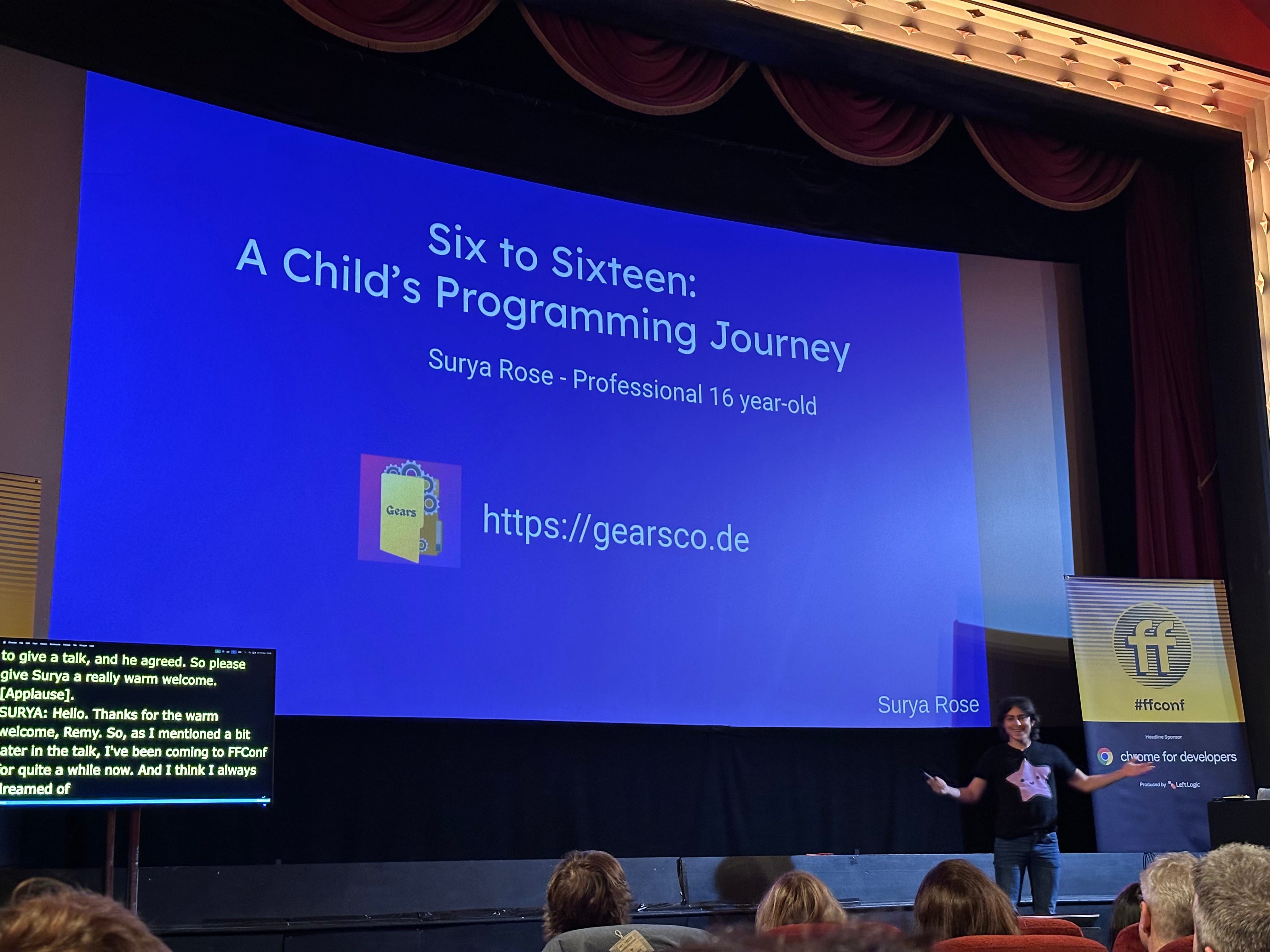
Off to Brighton again for my second ffconf, and it didn’t disappoint. The range and depth of each talk blew me away. From Hellen Ward’s deep dive into women’s role in the establishment of computer science, to Sergès Goma lambasting us all for being part of a code cult because of the way we fixate on tools, we went through all emotions throughout the day as we covered coding, online cultures, philosophy, and the politics of the internet.
Special mention and congratulations to Surya Rose, who at the age of sixteen, had the whole audience in thrall as he illustrated his journey with programming, experimenting with making his own games, to becoming an active part of the Gleam coding project.
The first two videos are already online, and the remaining six will be released in the coming weeks. So do yourself a favour — buy a ticket and make a plan to be there in 2026! 👾
What have I read recently?
🗣️ Speak Still: Articulating the Silence of Bilingualism: I really enjoy the Inklings series of short non-fiction published by 404 Ink. Each book is about 100 pages and is by a first-time writer. In this book, Wing Lam Tong (a writer from Hong Kong) reflects on the experience of thinking and speaking across two languages; both Cantonese and English have their idiosyncrasies and contradictions. After reading Speak Still, I was left keenly aware of the ways our ability to make sense of the world is shaped by the concepts our languages either equips or withholds from us.
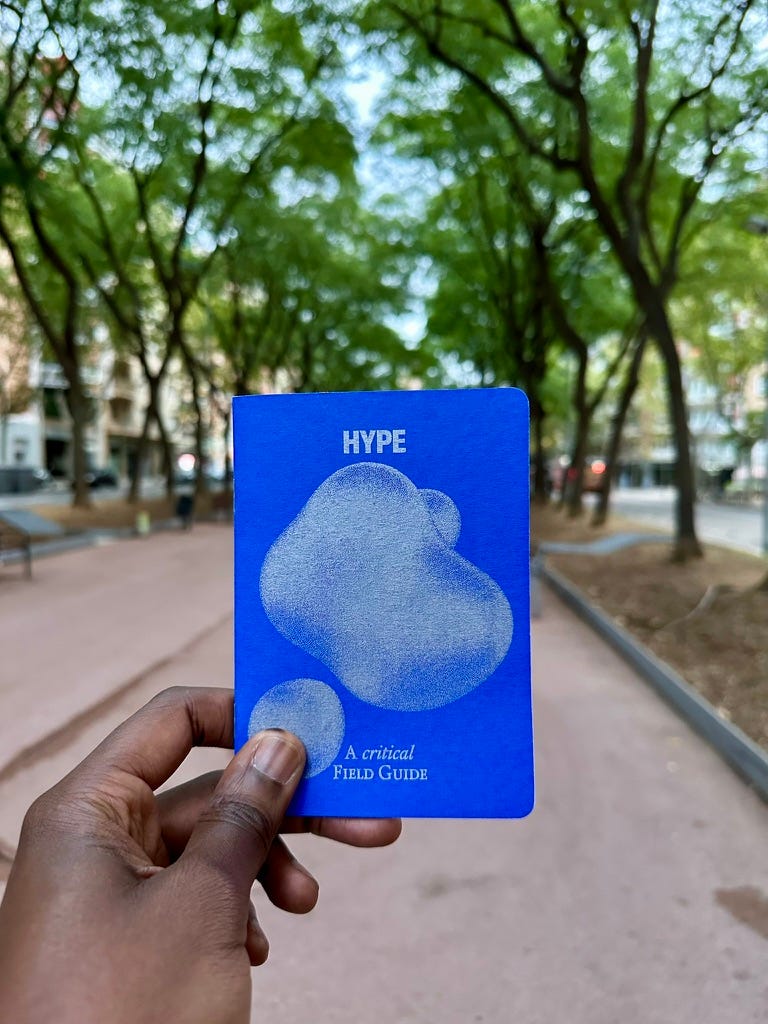
💥 HYPE: A Critical Field Guide: I met Johannes Klingebiel, a design researcher from Munich, at the Hype Studies conference in Barcelona. In this pocket-sized guide book, he gives us a toolkit for puncturing technology hype. If you have been uneasy about the hype inflating expectations around generative AI, crypto, NFTs, driverless cars, the metaverse, Internet of Things, quantum computing, nuclear fusion (to name a few) …. this book is for you!
🚌 No. 91/92: notes on a Parisian commute by Lauren Elkin. Confession time — I like to recreationally ride buses. If I have time to kill on a weekend, I find it to be a therapeutic pastime, and a slower way to zone out and just “be.” It seems I’m not the only one. Written as informal diary on her iPhone 5c Notes app, Elkin makes observations as she commutes on the 91 and 92 buses in Paris between 2014 and 2015 as the city reels from the collective trauma of the Charlie Hebdo attacks as well as some of her own personal tragedy too. We all carry so much baggage. If we take a moment to look around, the spaces we share on public transit are a rare window into the humanity of the people surrounding us — people about whom we know so little even though we breath the same air and routinely share such intimate space. This is a special little book.
And finally… what’s next for First & Fifteenth?
Are you still reading? — respect! 👊🏾
🎓 On Friday 5 December, I will be attending Brain Rot, AI Slop, and the Enshittification of the Internet: A Symposium at Anglia Ruskin University. Look out for me if you are there! Thank you to Dr. Romy Gad el Rab for the tip!
🎓 From Thursday 5 to Friday 6 February 2026, I will be at ‘No & ...’: A Forum on Technological Refusal at Maastricht University. I am presenting “The Spirit of Bartleby: In defence of refusal” a talk I first gave at Research by the Sea in February 2025, but it won’t be a copy/paste — my thinking has developed much more since then. Registration opens on 15 December, and the event is free but capacity is limited to 100.
📨 First and Fifteenth returns in Spring 2026 when I will be reviewing The AI Con by Emily M. Bender and Alex Hanna (I’ve already written the review, but I’m sitting on it for now). I have some more momentous changes planned too, but I will share details closer to the time.
As long as you have subscribed you will receive further updates by email.
Thank you for your continued interest and support!
Honoured to have been part of your extraordinarily rich (and richly remembered) year Michael. Your talk has stayed with me since Content Rising. Yours in pursuit of birdsong and the peace required to hear it. 🐦⬛
Goodness you have been busy! Love following your success. Honoured to be mentioned in your shout outs among such intelligent and interesting company too. What a year Michael! Can’t wait to see what 2026 has in store for you ❤️